

Cheap Chicken Coop Guide: Build or Buy on a Budget
Most cheap chicken coop advice gets the first lesson backward. It treats the box as the whole decision, then acts surprised when the actual bill shows up in hardware cloth, vents, roofing, and run space. If you only shop for the lowest sticker price, you can end up with a coop that costs less on day one and more every month after that.
A sensible budget starts with the whole system, not the shell. That means the coop, the run, the predator barrier, the airflow, and the space your birds need to live comfortably. The cheapest coop is the one that stays dry, safe, and usable without a second round of fixes.
What a Cheap Chicken Coop Really Costs
A cheap chicken coop can become an expensive project once the shell is only the starting point. Consumer cost guides place a typical build between $300 and $2,000, with a common spend near $600 for an 18-square-foot coop and a 90-foot run sized for about 6 chickens (Fixr cost guide). Self-built coops can also reach four figures when the plan includes durable materials, predator protection, and enough run space.
The coop often takes the largest share of the upfront budget because it must handle several jobs at once. It needs to support bedding, shed rain, limit drafts, allow ventilation, and keep predators out. Cheap materials may reduce the initial bill, but replacing warped panels, wet roofing, or weak fasteners can cost more than buying a sound kit in the first place.
The budget mistake of pricing the shell only
Shoppers compare plans and kits by the shell price, then forget the run and the safety upgrades. A bare box may need a roof, roosts, nest boxes, ventilation openings, a secure door, and a properly protected run before it is ready for birds. Those additions also take time, and unpaid labor still has value when a supposedly cheap build occupies several weekends.
The comparison should cover the whole setup: coop, run, hardware, weather protection, predator barriers, and likely repairs. A kit can be the better bargain when it includes components you would otherwise buy separately. A salvaged structure can work when its frame is sound, but damaged wood or difficult modifications can erase the savings.
Practical rule: if the coop cannot protect birds from weather and predators, it is unfinished, regardless of its shell price.
Coop Essentials You Cannot Skip
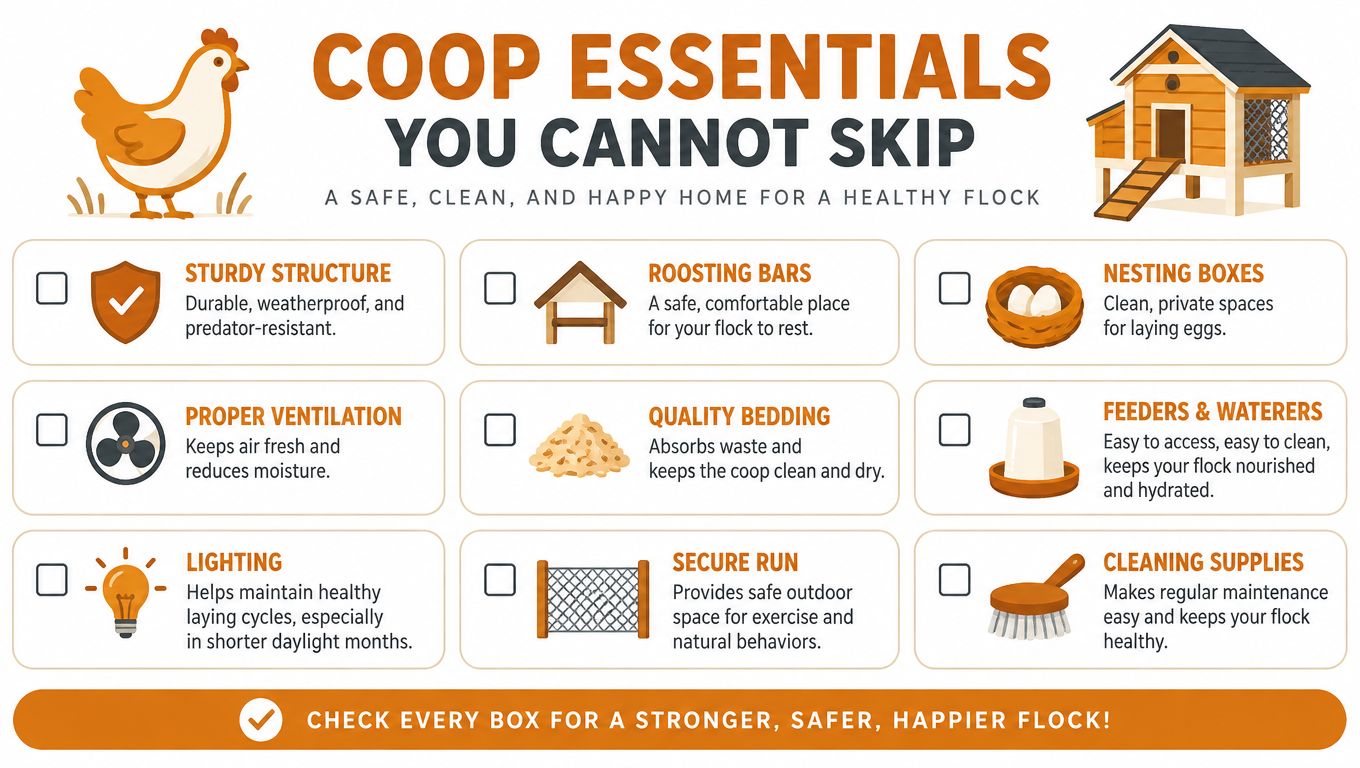
A budget coop still needs the same basic anatomy as an expensive one. Birds need enough room to move, roost bars they can perch on, nest boxes that stay clean enough to use, and airflow that clears moisture without blasting them with drafts. If a plan omits any of those, the savings usually show up later as stress, damp litter, or repairs.
The most common cheap-coop failure is sealing the structure too tightly. People use solid panels and plastic sheeting because they feel protective, then trap humidity and ammonia inside. That's rough on birds and rough on bedding, because damp litter needs more frequent turning, fluffing, or replacement.
Ventilation is not optional
Extension guidance says to block drafts without eliminating airflow because moisture and ammonia build up when ventilation drops. A practical rule used by poultry builders is about 1 square foot of vent area per 10 square feet of floor space, with vents placed above roost height so air can move without chilling sleeping birds (OSU Extension).
Vent high, not low. Air should move through the coop, but cold drafts should not blow across the roosts.
That one rule is especially important in a cheap chicken coop because low-cost builds often rely on solid walls and tight plastic coverings. Those shortcuts trap dampness, and once bedding stays wet, the coop starts asking for constant attention.
For feed support, some keepers also like a simple supplement that fits into a basic coop routine, such as USA GROWN BLACK SOLDIER FLY LARVAE FOR CHICKENS. Used sparingly, that kind of treat can fit into a broader flock-care routine, but it doesn't replace the need for dry litter and airflow.
A quick checklist to judge any coop
- Roosts: high enough for birds to sleep off the floor, sturdy enough not to flex.
- Nest boxes: easy to reach and clean, with enough separation that hens aren't crammed together.
- Vent openings: screened and placed above roost level.
- Floor and walls: easy to clean, but not so sealed that moisture gets trapped.
- Access: doors that open without fighting the frame every time.
If a plan misses two or more of those basics, it's not really a bargain. It's a future repair list.
DIY Versus Prefab Versus Secondhand
The cheapest path depends on your tools, your time, and how much rebuilding you're willing to do later. DIY can be the lowest cash outlay, but only if you can source materials well and keep the design simple. A prefab kit saves labor, while a secondhand coop can be the fastest way to get birds sheltered if you're willing to inspect, disinfect, and repair.
Here's the clean comparison.
| Path | Typical Cost | Time & Skill | Best For |
|---|---|---|---|
| DIY from plans | Low to moderate, depending on materials | More time, basic carpentry helps | People who can measure, cut, and want control over design |
| Flat-pack kit | Moderate to higher | Faster assembly, less skill | Buyers who want convenience and predictable parts |
| Secondhand coop | Lowest on paper, sometimes variable after repairs | Needs inspection and cleanup skills | Shoppers who can evaluate damage and biosecurity risk |
Market data helps explain why prefabs and DIY kits look the way they do. Wooden coops account for about 45% of units sold, while plastic and metal coops represent about 25% and 15%, respectively, which shows how strongly buyers still lean toward familiar, easy-to-modify construction (MarketGrowthReports). That matters for resale and upgrades, because wood is easier to patch, repaint, and modify than many lightweight alternatives.
The upside of secondhand is price. The downside is uncertainty. Used coops can hide rot, weak hardware, parasites, and a design that was barely adequate when new. If you buy used, check every hinge, latch, roof seam, and floor edge before a bird ever enters.
For a beginner-friendly design reference, this best chicken coop for beginners resource is useful because it keeps the setup simple without pretending safety is optional.
My rule of thumb: if you own a saw, a drill, and a weekend, DIY can make sense. If you need birds housed tomorrow, secondhand or prefab is the better fit, but only if you budget for upgrades.
How to Build a Cheap Coop the Smart Way
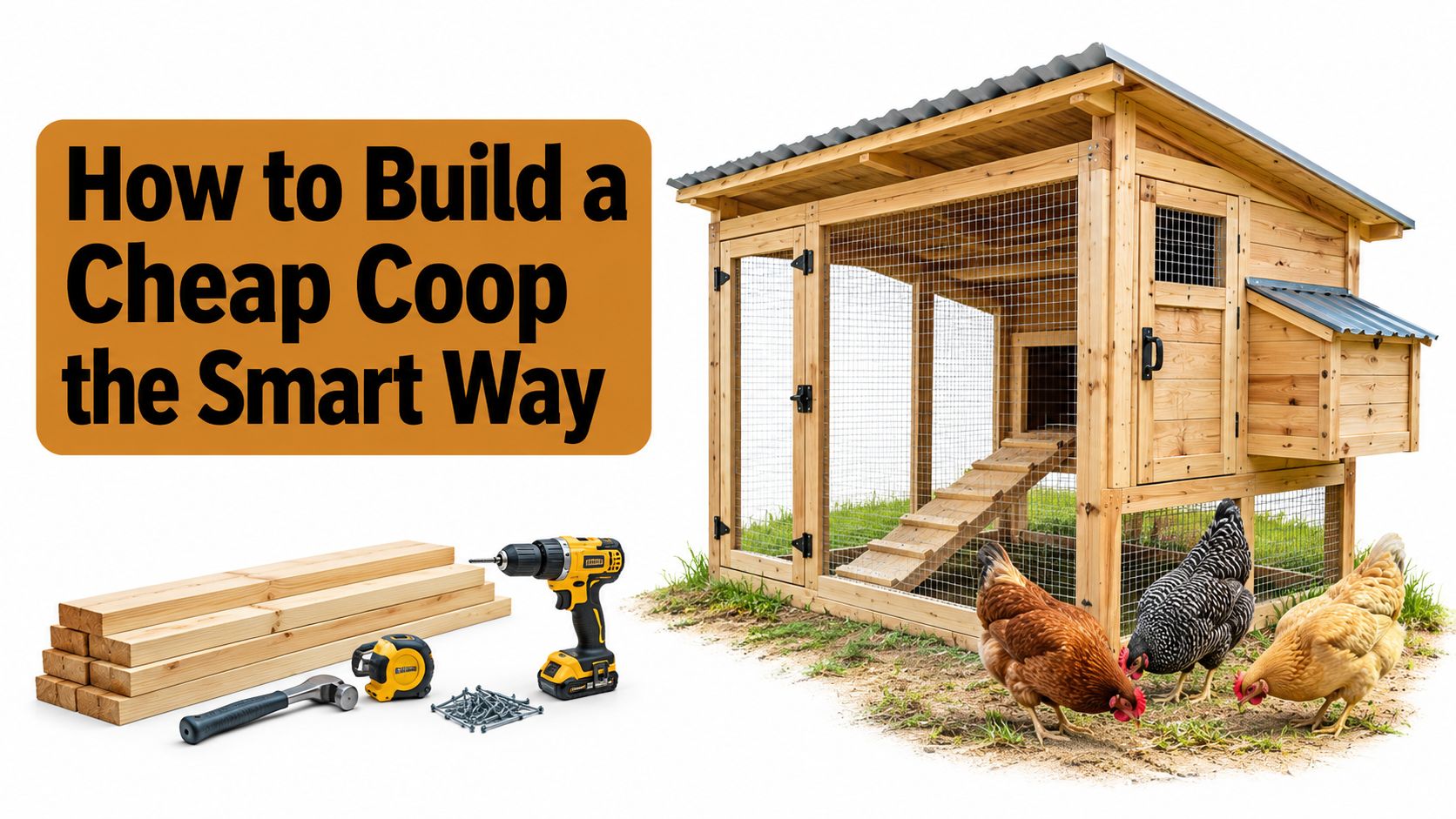
The smartest savings come from simplifying the shape, not weakening the structure. A boxy coop wastes less lumber than a decorative one with multiple roof lines, trim pieces, and odd angles. If you're building from scratch, think in rectangles, not cute architectural extras.
Salvaged and reclaimed materials can cut costs hard when they're sound. Old shed walls, leftover roofing, and clean dimensional lumber often make more sense than buying everything new. That said, anything that touches the floor, the roof, or the predator barrier needs a careful inspection, because a hidden crack or soft spot usually costs more later than the money you saved upfront.
A salvage build can land in the rough $20 to $150 range, a basic DIY build often sits around $150 to $500, and a predator-proof walk-in coop usually moves into $900 to $2,500 because hardware cloth, locking latches, and covered vents add real material and labor costs (Zubair Khalid coop guide). Those benchmarks are useful because they tell you where the money goes.
Where to save without shooting yourself in the foot
- Simplify the layout. One clean rectangular house is cheaper to frame than a fussy design with bump-outs.
- Use reclaimed siding. Good enough siding is fine if it stays dry and doesn't hide rot.
- Keep rooflines simple. A basic roof is easier to seal and patch.
- Buy hardware selectively. Cheap hinges often fail, but you don't need fancy decorative hardware.
- Repurpose with purpose. Shed conversions and some pallet builds can work if the structure is straight and clean.
If you want a visual planning aid before you cut lumber, ai for backyard design can be a helpful way to think through footprint, placement, and flow before you start buying materials. The value there is in avoiding awkward layouts, not in adding complexity.
The shortcuts that backfire
Don't cheap out on the frame, the roof seal, or the spots where predators can pry. Trim, paint color, and decorative shingles are all optional. Structural rigidity, dry bedding, and secure openings are not.
For pallet ideas and layout discipline, the chicken coop pallets plans page is worth a look because it focuses attention on using simple materials without turning the coop into a weak spot.
Predator-Proofing Your Budget Coop
Predator resistance is where many budget coops fail, and it's the one category I wouldn't treat as optional. Chicken wire looks cheap because it is cheap, but it's not the same thing as real predator protection. If raccoons, dogs, or other diggers are in your area, flimsy wire and weak latches turn a bargain coop into a liability.
Use 1/2-inch hardware cloth on every opening, not chicken wire, and don't forget vents and windows. Add a buried hardware-cloth skirt or apron about 12 to 18 inches deep to stop digging predators (Zubair Khalid coop guide). That's the part people skip because it isn't visible, but that hidden layer is what keeps the coop from being peeled open overnight.
The hardware list that matters
- 1/2-inch hardware cloth on all openings.
- Locking latches that animals can't simple-push open.
- Buried skirt or apron around the perimeter.
- Covered vents so airflow doesn't become a weakness.
- Strong hinges on every access point.
Cheap coops don't fail because they're small. They fail because a clever animal finds one weak edge.
If you need a fence or enclosure reference while planning the coop perimeter, affordable chain link fencing CT is a useful example of how serious containment is handled in practice. The principle carries over directly, because the coop and the run have to work together as one barrier.
The temptation to save on predator protection is understandable, but it's the wrong place to trim. A few extra dollars on cloth and latches is still far less painful than losing birds, rebuilding the coop, and starting over on the same frame. If you're shopping used, the rat-proof chicken house approach is a good reminder that small openings matter just as much as the big ones.
Choosing Portable or Permanent for Your Climate
Cheap coops aren't just about price, they're about fit. A portable tractor-style coop can make sense in a mild climate or a small yard, especially when you want to move birds onto fresh ground. A permanent coop usually wins when weather gets harsher, the flock is staying put, or the yard needs stronger predator control.
Recent market coverage points to stronger demand for modular and portable systems, with about 62% of small-scale farmers and households reportedly adopting modular or portable setups, while about 37% of new installations include automation such as feeding, watering, or ventilation (Global Growth Insights). That shift says budget buyers want flexibility, but flexibility only helps if the climate and yard support it.
When portability beats permanence
A portable coop helps when:
- the yard is spacious and easy to rotate,
- winters are mild,
- shade is easy to provide,
- and you can move the coop without wrecking your back.
A permanent coop makes more sense when:
- summer heat is intense,
- wet weather is frequent,
- predators pressure the yard,
- or the flock will stay in one place long term.
Portable systems can lower upfront spend, but they can raise labor and management costs later. If the run gets muddy, if the wheels sink, or if the coop has poor shade and weak airflow, the “cheap” design starts asking for extra work and more frequent bedding changes.
A cheap coop that fits your climate is cheaper than a bargain coop that fights your weather every month.
The clean decision rule is simple. If you can move a portable coop easily and your weather is forgiving, portability can be the smarter buy. If your area is hot, wet, cold, or predator-heavy, a permanent build usually costs less in frustration over time.
Keeping Coop Costs Low for Years to Come
The purchase price is only the opening number. A cheap coop stays affordable when you budget for upkeep, because small leaks, loose hinges, and damp bedding can become expensive repairs. Regular checks also extend the structure's useful life and reduce emergency work.
Inspect the coop at the start of each season and after severe weather. Seal roof and floor leaks early, replace bedding before moisture causes rot, and check ventilation screens and hardware cloth for rust, tears, or gaps. Tighten latches and hinges before they fail. Good litter management and steady airflow keep the interior drier, reduce bedding waste, and make conditions more comfortable for the flock.
Make upkeep part of the budget
Set aside money and time for:
- replacing bedding before it turns sour,
- sealing roof leaks as soon as they appear,
- checking wire and cloth for predator-sized gaps,
- and tightening moving parts before they break.
A DIY coop is not automatically cheaper if it needs frequent repairs or repeated upgrades. Predator-proof wire, a dry floor, proper ventilation, and enough run space often cost more than the basic box. Price those parts before deciding whether building from scraps really saves money.
During molting or winter, a practical treat such as black soldier fly larvae can fit a simple care routine. The product is a USA-grown black soldier fly larvae feed with 36 to 42% crude protein and up to 85% more calcium than mealworms. Use it as a treat alongside regular feed, not as a replacement.
Maintenance wins twice: it protects the coop and supports healthier birds, reducing surprises in both the structure and the flock.
Start with the full system budget, including the run, wire, bedding, repairs, and seasonal adjustments. Then choose the design that matches your climate, tools, and tolerance for upkeep. The right cheap coop is one you can keep safe, dry, and practical for years.
For a straightforward flock treat, Pure Grubs offers USA-grown dried black soldier fly larvae for chickens and other birds. It can sit alongside regular feed and routine coop care.