

Black Fly Larvae for Chickens A Complete Guide
If you're looking for a treat that's both nutritious and sustainable, black soldier fly larvae are a fantastic choice for your flock. They deliver a powerful boost of calcium for stronger eggshells and high-quality protein for healthy feathers. Think of them as a natural multivitamin that taps into your chickens' instinct to forage for bugs and supports their overall well-being.
Why Chicken Keepers Are Turning to Black Fly Larvae
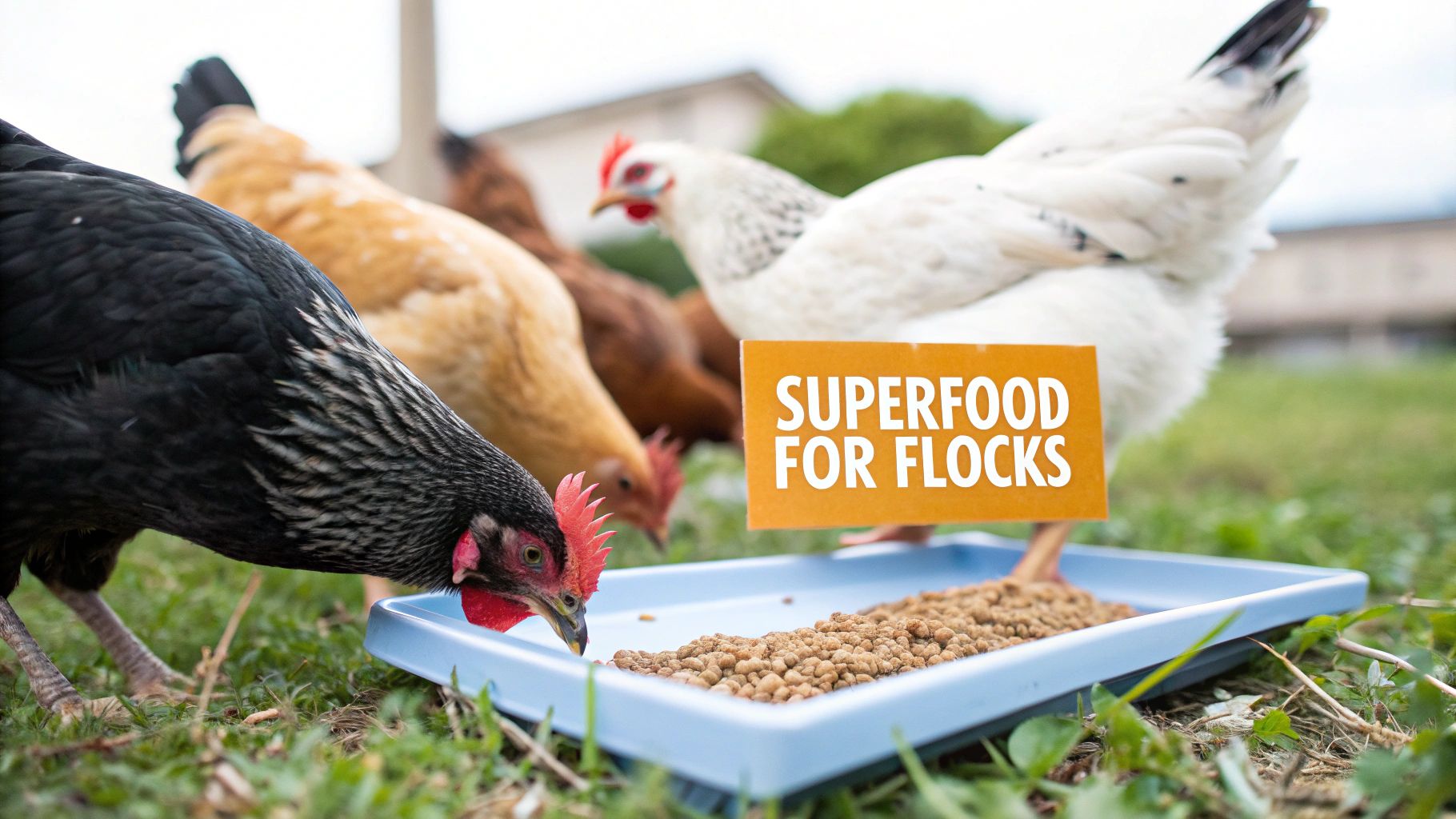
Spend any time in backyard chicken circles, and you’ll hear the buzz about black soldier fly larvae (BSFL). But what exactly are they, and why have they become such a go-to for flock owners? These little grubs are the larvae of the Black Soldier Fly (Hermetia illucens), a completely harmless insect that is incredible at one thing: converting organic waste into a nutrient-packed superfood.
They’re essentially nature's tiny recyclers. For us chicken keepers, this process creates a convenient, shelf-stable treat that offers far more concentrated nutrition than a handful of scratch grains or kitchen scraps ever could.
More Than Just a Treat
It's easy to lump any extra snack into the "treat" category, but black soldier fly larvae really serve a deeper purpose. I like to think of them less like chicken candy and more like a targeted health supplement.
Their unique nutritional profile directly helps with some of the most common flock management challenges, from flimsy eggshells during peak laying season to the intense energy drain of the annual molt. That’s why so many seasoned keepers, myself included, now consider them an essential part of a year-round feeding routine. They're a simple way to boost flock resilience and promote the kind of vibrant health you can truly see.
You can dive deeper into their role as a sustainable animal feed solution in our detailed guide.
The move toward BSFL isn't just about health; it's also about smart economics. With poultry feed costs making up as much as 70% of production expenses, flock owners are looking for cost-effective alternatives to expensive soy and wheat.
Let's break down the main reasons these little grubs are having such a big impact on backyard flocks everywhere.
Quick Benefits of BSFL for Your Flock
This table gives a snapshot of the major advantages of adding black soldier fly larvae to your chickens' diet, highlighting how these benefits translate to a healthier, happier flock.
| Benefit | Why It Matters for Your Chickens |
|---|---|
| Exceptional Calcium Levels | Directly supports the formation of strong, hard eggshells, making soft or brittle eggs much less likely. |
| High-Quality Protein | Provides the essential amino acids needed for growing lush, vibrant feathers, especially during the stressful molt. |
| Natural Foraging Behavior | Tossing grubs in the run encourages your chickens' instinct to scratch and peck, keeping them active and entertained. |
| Sustainable & All-Natural | Offers a clean, eco-friendly protein source without the strange additives or fillers found in some commercial treats. |
In short, BSFL offer a simple and effective way to address key nutritional needs while also enriching your chickens' daily lives.
What's Really Inside Black Soldier Fly Larvae?
When you hear "high protein," it’s easy to nod along, but that phrase barely scratches the surface of why black soldier fly larvae for chickens are such a game-changer. To get the full picture, you have to look past the buzzwords and at the actual building blocks these little grubs provide. It's the difference between a microwave dinner and a home-cooked meal made with fresh ingredients—both fill you up, but only one truly nourishes.
Black soldier fly larvae, or BSFL, are loaded with a whole symphony of nutrients that work in harmony. We're not talking about empty calories here. They deliver a powerhouse combination of high-quality protein, good fats, and crucial minerals that lead to real, visible results in your flock, from the glossy sheen on their feathers to the solid feel of the eggs in your nesting box.
A Protein Powerhouse for Perfect Plumage
Protein is the absolute foundation of a chicken's health, and BSFL are one of the best sources you can find. A chicken's feathers are made of about 85% protein, mostly a tough type called keratin. So, when your flock goes through a molt—that annual process of shedding old feathers and growing a whole new set—their need for protein goes through the roof.
Giving them BSFL during this time is like handing a construction crew a fresh delivery of top-grade lumber. The amino acids, which are the individual components of protein, give your hens exactly what they need to rebuild their feathers quickly and efficiently. This helps shorten the awkward molting phase, cuts down on stress, and gets them back to being fully feathered and happy.
A complete amino acid profile means your chickens get all the necessary components to not only grow strong, healthy feathers but also support muscle development and overall bodily functions. It’s a holistic protein source that fuels them from the inside out.
Good Fats for Clean Energy
Beyond protein, black soldier fly larvae are also rich in healthy fats. Don't let the word "fat" scare you; this isn't the junk food kind. For a chicken, this is a clean, concentrated source of energy. It’s especially vital for active, free-ranging birds who are constantly scratching, foraging, and burning calories all day long.
This fat reserve helps them regulate their body temperature in the cold and fuels all their natural behaviors, from energetic dust baths to exploring every corner of the run. Think of it as a slow-burning log in the fire, providing sustained energy that keeps them vigorous and engaged. For a deeper dive into the specific makeup of these treats, you can read our guide on dried black soldier fly larvae.
The Calcium Secret for Stronger Eggshells
Now, this is where BSFL really pull away from the pack. They boast an almost ideal calcium-to-phosphorus ratio, which is incredibly important for laying hens. It works like a lock and key: calcium is the key to strong eggshells, but it needs the right amount of phosphorus to "unlock" its absorption into the chicken's system.
Here's the problem with many other treats: they are often low in calcium but high in phosphorus. This imbalance can actually block calcium from being absorbed, leading to thin, weak, and brittle eggshells. Worse, if this goes on for too long, a hen will start pulling calcium from her own bones to form her eggs, which can cause serious skeletal problems down the road.
The perfectly balanced profile in black fly larvae for chickens solves this problem. The abundant calcium they contain is bioavailable, meaning the chicken's body can actually use it for two critical jobs:
- Building Tough Eggshells: Hens get a steady, usable supply of calcium that goes directly into making the eggshell, resulting in noticeably harder, more durable shells that don't crack the moment you touch them.
- Protecting Bone Health: They can produce those beautiful eggs without robbing their own bodies of essential minerals, preserving their bone density and supporting their long-term health.
Honestly, this unique nutritional advantage is probably the single biggest reason to add BSFL to your flock's diet. It directly tackles one of the most common headaches for any chicken owner—poor eggshell quality—with a simple, natural solution.
Why Black Soldier Fly Larvae Are a Better Choice Than Mealworms
When you're looking for a treat for your flock, it’s easy to grab a bag of mealworms. They’ve been the go-to for years, and chickens certainly love them. But if you’re serious about your hens' health, there’s a much better option out there: black soldier fly larvae (BSFL). They aren't just another bug; they are a powerhouse of nutrition that directly supports the long-term well-being of your birds.
The real difference-maker is calcium. Mealworms have a major nutritional flaw—they're incredibly low in calcium but high in phosphorus. This lopsided ratio is a big problem. When a hen eats something high in phosphorus, her body has to use up its stored calcium to process it. That means she's actually pulling calcium from her own bones just to digest her "treat," all while trying to form strong eggshells.
Over time, feeding a lot of mealworms can lead to exactly what you're trying to avoid: thin, brittle eggshells and even weakened bones in your best layers. It's a classic case of a popular choice not being the healthiest one.
Nutritional Showdown: Black Fly Larvae vs. Mealworms
Let's get right to it and compare them head-to-head. While the exact numbers can shift a bit depending on how they're raised and dried, the nutritional trend is always crystal clear. BSFL don't just have more calcium; they have it in a nearly perfect ratio with phosphorus, which means your chickens can actually absorb and use it effectively.
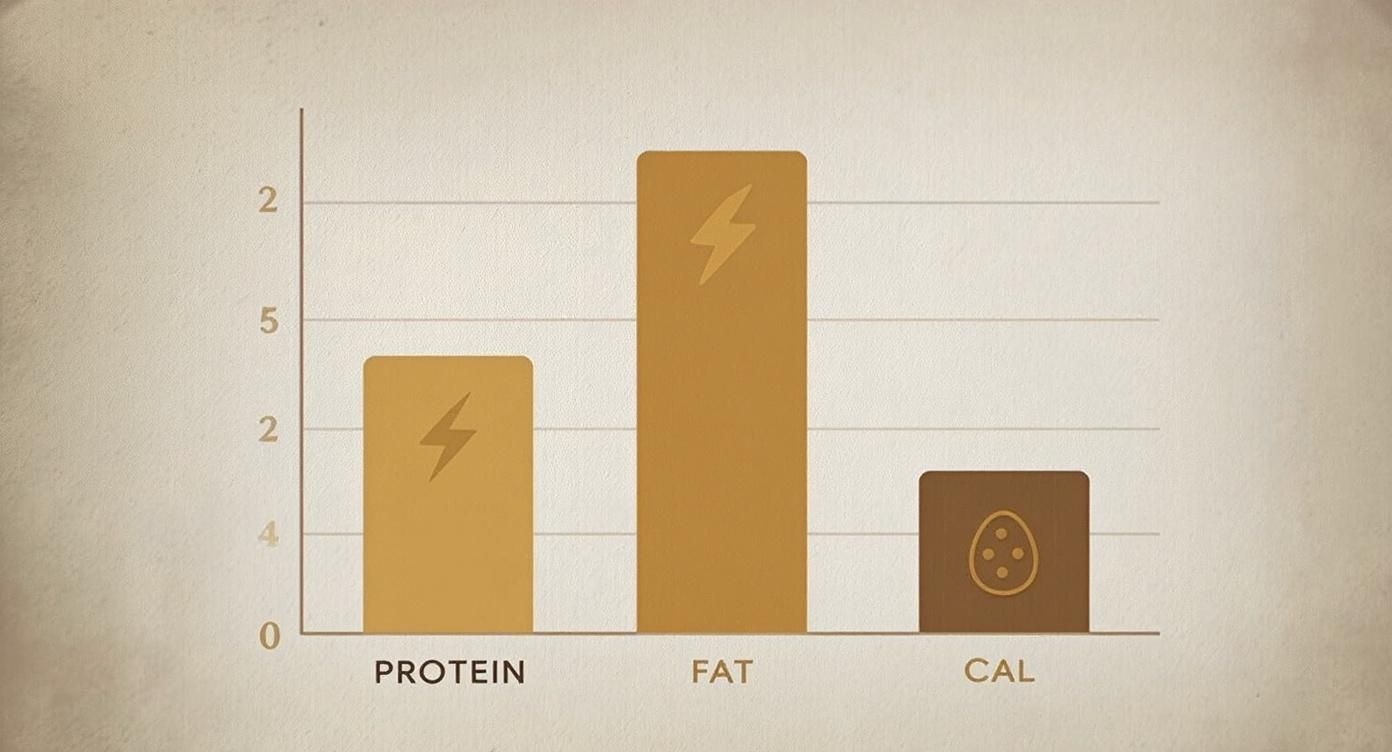
This simple chart shows that BSFL offer a fantastic balance of protein and fat, but it's the unseen calcium benefit that truly sets them apart for poultry.
To really see the difference, let’s put the key nutrients side-by-side.
| Nutrient | Black Soldier Fly Larvae (Approx.) | Mealworms (Approx.) | Impact on Chickens |
|---|---|---|---|
| Protein | 40-50% | 45-50% | Both are excellent protein sources for feather growth and muscle development. |
| Fat | 25-35% | 25-30% | Both provide valuable energy, especially helpful during molting or in cold weather. |
| Calcium | 2-3% | <0.1% | This is the crucial difference. BSFL provide vital calcium for strong eggshells and bone health. |
| Calcium to Phosphorus Ratio | ~1.5:1 to 2:1 | ~1:7 | The BSFL ratio is nearly ideal for absorption. The mealworm ratio actively hinders calcium uptake. |
The takeaway here is simple: while both look like good protein sources on the surface, only BSFL are actively contributing to your flock's skeletal and reproductive health. Mealworms, on the other hand, can subtly undermine it.
A Real-World Example: The Eggshell Test
Think about this common scenario. You have two backyard flocks, kept in identical conditions. Flock A gets a daily handful of mealworms, while Flock B gets the same amount of dried black soldier fly larvae. For the first month, you wouldn't notice a difference.
But after a few months, the owner of Flock A starts noticing more and more eggs are cracking the second they're picked up. The shells just feel flimsy. One of his best layers also seems a little less active than usual.
Meanwhile, every egg from Flock B has a strong, solid shell. The hens are energetic, their feathers have a healthy sheen, and they're laying like clockwork. The only real difference was the treat. Flock B was getting a daily calcium boost, while Flock A was getting a treat that was slowly depleting their mineral stores. This isn't just a hypothetical; it's a predictable outcome based entirely on nutritional science.
This is why there's such a massive surge of interest in BSFL as a sustainable feed ingredient. With traditional feed costs rising, the global black soldier fly market—valued around USD 11.09 billion—is expected to rocket to USD 68.09 billion by 2032. This growth is all thanks to their incredible ability to turn waste into high-quality, perfectly balanced animal protein. You can learn more about this expanding market and how it’s changing sustainable farming.
How to Safely Feed Black Fly Larvae to Your Flock
Alright, now that we’ve covered the amazing nutritional punch these little grubs pack, let's get to the fun part—actually feeding them to your chickens. It’s incredibly simple, but a few smart practices will make sure your flock gets all the good stuff without ruining their appetite for their main meal.
Think of it like this: their regular feed is their balanced dinner, and BSFL are the high-performance supplement. You wouldn't want them to fill up on dessert and skip their veggies, right?
The golden rule for any and all chicken treats is the 90/10 rule. A minimum of 90% of your flock's diet needs to come from their complete layer feed. Treats, including BSFL, should never make up more than the remaining 10%. This ensures they get the full spectrum of vitamins and minerals they need to thrive, while the larvae give them that extra boost of protein and calcium.
Finding the Right Serving Size
So, how much is enough? For most adult chickens, a good starting point is about 1-2 tablespoons of dried larvae per bird, per day.
Don't worry about getting out the measuring spoons—a generous handful for a small flock of 5-6 birds is usually spot on. The real key is to watch your chickens. If they start turning their beaks up at their regular feed, you’re probably being a little too generous. Just scale it back until you find that happy medium.
Creative Ways to Serve Black Fly Larvae
How you offer these grubs can be just as important as how many you give. You can use them to build your bond, bust boredom, and encourage your chickens to just be chickens.
Here are a few of my favorite ways to serve them up:
- Scatter Feeding: This is, hands down, the best way to tap into their natural instincts. Tossing a handful of grubs across their run or a patch of grass gets them scratching, pecking, and foraging just like they would in the wild. It’s fantastic mental stimulation and helps prevent bad habits like feather picking.
- Hand-Feeding: Want to get your flock to eat out of the palm of your hand? This is how you do it. Offering grubs directly from your hand builds an incredible amount of trust. It teaches them to associate you with a delicious, high-value reward, and it’s a wonderful way to connect with your birds.
- Mixing with Feed: On those bitterly cold winter days or when the flock is a bit stressed, I like to mix the larvae right into their feed. This ensures even the more timid hens get their share and can tempt a picky eater to clean up their bowl. It's a great way to deliver an extra energy boost when they need it most.
Remember, the goal is to supplement, not replace. By scattering the larvae, you also make sure the bossy hens can't hog them all. It gives everyone a fair shot at foraging for their share.
Strategic Feeding for Peak Health
Beyond being a daily treat, BSFL are a powerful tool you can use to manage your flock's health through stressful times.
The most important time to bring them out is during the annual molt. A chicken’s feathers are roughly 85% protein, and growing a whole new set is a massive drain on their system. Providing that extra, easily digestible protein gives their bodies the exact building blocks needed to grow healthy feathers back quickly, which helps shorten the whole miserable process.
Another perfect time for a BSFL boost is if you start finding soft or weak-shelled eggs in the nesting box. A daily serving can provide that quick hit of bioavailable calcium needed to get shell quality back on track. It's a simple, natural way to support your hens and get those beautiful, strong eggs you're looking for.
Choosing and Storing High-Quality Black Fly Larvae
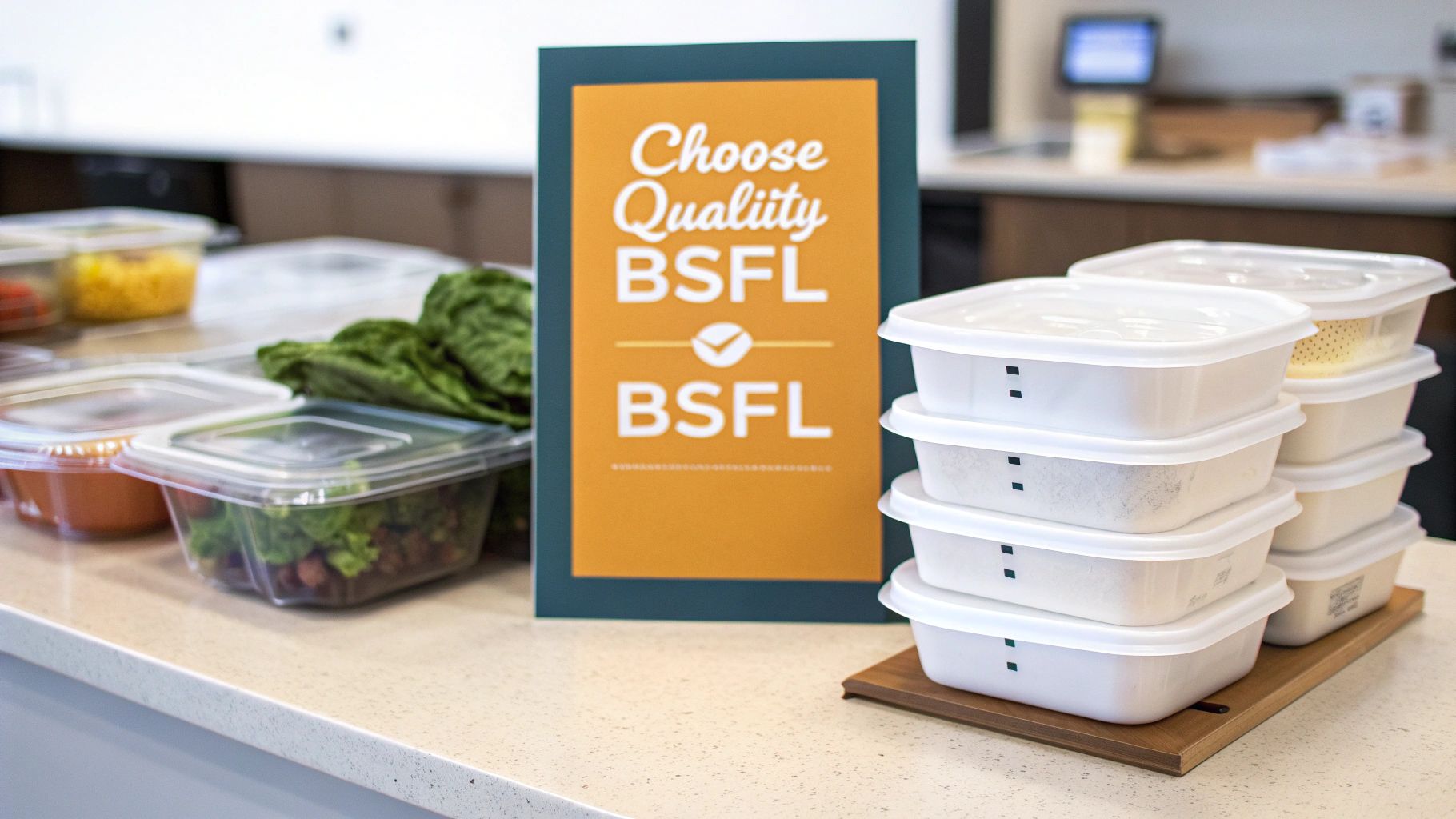
As more and more chicken keepers discover the benefits of black fly larvae for chickens, the market has absolutely exploded with options. But here’s the catch: not all BSFL products are created equal. Far from it. Knowing what to look for is the key to making sure you're giving your flock a healthy treat, not a liability.
Think about it like shopping for your own food. You instinctively check for quality, freshness, and where it came from. You should apply that same level of care when buying treats for your birds. A little bit of know-how will help you spot the good stuff and avoid the questionable brands.
What to Look For When Buying BSFL
Your mission is to find a clean, safe, and nutritionally potent product. The quality can swing wildly depending on where the larvae were raised and how they were dried. A cheap price tag might catch your eye, but it often signals that corners were cut in safety and production.
Here’s a quick checklist to run through before you buy:
- USA-Grown and Processed: Sourcing from the U.S. generally means the product falls under stricter regulatory standards from agencies like the FDA. This gives you a much greater level of confidence in its safety compared to imports with murky origins.
- No Additives or Preservatives: The ingredients list should be short and sweet: 100% dried black soldier fly larvae. There's absolutely no need for fillers, artificial flavors, or chemical preservatives.
- Batch Testing for Contaminants: This is a big one. Good companies test their products for heavy metals like lead, mercury, and arsenic. This is non-negotiable, as these toxins can build up in a hen’s body and potentially find their way into her eggs.
- Consistent Appearance: Take a look at the grubs themselves. High-quality dried larvae should look plump, whole, and have a consistent golden-brown color. If they look dark, flat, or are mostly broken pieces, it could be a red flag for poor drying methods or low-quality feed.
Choosing a brand that's transparent about its sourcing and safety testing isn't just for peace of mind. It’s a direct investment in your flock’s health and the quality of the eggs on your breakfast table.
This push for local, sustainable production isn't just happening here. The Asia-Pacific region, for instance, is a global leader in using BSFL to solve two problems at once: managing organic waste and creating an affordable protein source. It’s a fantastic example of a circular economy in action.
If you want to dig deeper into purchasing tips, our guide on where to buy black soldier fly larvae is a great resource.
Proper Storage for Lasting Freshness
So, you've got your hands on some top-notch grubs. Great! Now you just need to store them correctly to lock in all that nutritional goodness. The good news is that dried larvae are incredibly shelf-stable and easy to manage.
Just follow these simple rules to keep them fresh for up to a year or even longer:
- Keep Them Dry: Moisture is the enemy. It can invite mold and make the larvae stick together in a useless clump. Always keep them in a sealed, airtight container.
- Store in a Cool, Dark Place: Direct sunlight and heat will break down the healthy fats and oils in the larvae over time, making them less nutritious. A pantry, a shelf in the garage, or your feed shed are all perfect spots.
- Use the Original Packaging: Most brands package their grubs in resealable bags for a reason—they're designed for it! If you do move them to a new container, just make sure it’s completely dry and has a tight-fitting lid.
By keeping these simple buying and storage tips in mind, you can feel confident that you’re giving your flock a safe, delicious, and incredibly healthy treat.
Got Questions About Feeding Your Chickens Black Soldier Fly Larvae?
It's smart to ask questions before introducing anything new to your flock's diet, even something as beneficial as black soldier fly larvae. Let's walk through some of the most common things chicken keepers wonder about, so you can feel totally confident scattering these little grubs in the coop.
Think of this as the practical, real-world guide to getting started.
Can I Feed Black Fly Larvae to Baby Chicks?
You bet, but it's best to wait just a little while. For the first few weeks, you want your chicks focused entirely on their starter crumble. That feed is perfectly balanced for their explosive growth, and you don't want to throw that off.
Once they're a bit older and pecking like pros, you can introduce some larvae. A great tip for the little ones is to crush the dried grubs first, making them much easier to handle. Just offer a tiny sprinkle as a special treat; their main nutrition should still come from their starter feed.
Will My Chickens Get Fat from Eating Black Fly Larvae?
That’s a fair question, but it’s really not a concern when you feed them as a treat. Unlike "junk food" like scratch grains, which are mostly carbs and fat, BSFL are loaded with high-quality protein. This protein fuels things your chickens actually need, like feather production and muscle health.
The golden rule here is moderation. Just follow the classic 90/10 rule: treats should never make up more than 10% of their daily diet. As long as you stick to that, BSFL will help build strong, healthy birds, not overweight ones.
Any treat can lead to weight gain if you go overboard. But the powerful nutritional punch of black soldier fly larvae makes them one of the best choices for supporting a lean, active flock, not for packing on fat.
Are There Any Risks to Feeding BSFL?
When you buy from a quality source, black soldier fly larvae are incredibly safe. The only real risk comes from cheap, imported products that might be raised on mystery waste or contaminated with pesticides or heavy metals.
This is exactly why choosing a brand that tests every batch for safety is non-negotiable. If you know the grubs are clean, the only other thing to remember is to start slow. Tossing a huge pile of any new food at your flock can cause a little digestive upset. A small handful is all you need to start, gradually working up to a regular treat amount. For a healthy flock, quality BSFL are all benefit and no risk.
How Do Black Fly Larvae Help During Molting?
Ah, the annual molt. It's one of the toughest times for a chicken. Feathers are about 85% protein, and growing thousands of new ones drains a bird's energy and nutrient reserves like nothing else. Their need for protein goes through the roof.
Giving them BSFL during the molt is like handing a marathon runner a high-energy protein bar at mile 20. The larvae provide a direct, easy-to-digest source of the exact amino acids needed to build strong, glossy feathers from scratch.
This protein boost can:
- Speed up the molting process so they get their protective coat back faster.
- Reduce the overall stress on their bodies.
- Keep their immune system strong when they're at their most vulnerable.
Simply put, a daily helping of larvae helps them get through that awkward, naked-looking phase much more smoothly and bounce back to laying eggs sooner.
Ready to give your flock the U.S.-grown, lab-tested, and calcium-rich benefits they deserve? Pure Grubs offers premium black soldier fly larvae that support stronger eggshells and vibrant feather growth. Give your flock a treat you can trust by shopping for Pure Grubs.