

The Best Chicken Feed for Egg Production A Practical Guide
Think of your hens as tiny, efficient egg-making machines. To keep the production line running smoothly day in and day out, they need a very specific set of raw materials. The absolute best feed to provide those materials is a complete commercial layer feed with 16-18% protein and at least 3.5% calcium.
Your Quick Guide to Boosting Egg Production
If you want a steady supply of high-quality eggs, a balanced diet is non-negotiable. A simple scoop of scratch grains just won't do the job. Every single ingredient in a quality layer feed is there for a reason, working together to support not just the number of eggs, but also the quality of the yolk, the white, and the shell.
When these essential building blocks aren't available in the right amounts, the whole operation slows down. You'll see fewer eggs, weaker shells, or both. This guide breaks down the core principles you need to know to get the most out of your flock and make smarter choices at the feed store.
Key Nutrients at a Glance
A hen is biologically wired to lay eggs, but her body can only work with the fuel you give her. Protein is the foundation for the rich yolk and the clear egg white, while calcium is the primary ingredient needed to build a strong, protective shell around it.
Think of it like this: Protein is the lumber and framework for the egg's interior, while calcium is the concrete that forms the hard, protective exterior. Energy, from carbohydrates and fats, is the fuel that powers the entire construction crew.
For those looking to really dial things in, some premium feeds include specialized ingredients. In major markets, feeds with added omega-3 sources and phytogenics have been shown to increase egg weight by 5-7% and reduce shell cracks by 15%, which directly boosts a flock's useful output. You can find a deeper analysis of these factors in reports on global egg production trends.
Understanding what's on the feed tag is your first step. The table below gives you a clear, actionable summary of the most important components.
Essential Nutrients for Peak Egg Production
Here’s a snapshot of the key players in a good layer feed and the critical role each one plays in getting a perfect egg from your hen.
| Nutrient | Optimal Percentage/Amount | Primary Role in Egg Production |
|---|---|---|
| Protein | 16-18% | Forms the egg white (albumen) and yolk; also essential for feather growth. |
| Calcium | 3.5-5% | Absolutely critical for forming strong, durable eggshells. |
| Phosphorus | 0.4% | Works hand-in-hand with calcium for shell formation and bone health. |
| Vitamin D3 | ~3,000 IU/kg | Helps the hen's body absorb and actually use the calcium she eats. |
| Fats & Carbs | Varies (Energy Source) | Provides the energy needed for daily laying and all other metabolic functions. |
Getting these nutrients right is the foundation of a productive and healthy flock. When you see these percentages on a bag of feed, you know you're giving your hens the tools they need to do their job well.
The Nutritional Blueprint of a Perfect Egg
Have you ever stopped to think about what it really takes for a hen to lay an egg nearly every single day? It's an incredible biological process, and it all comes down to the right fuel. Getting the best chicken feed for egg production isn't a matter of chance; it's about giving her body the precise nutritional tools it needs to do its job.
I like to think of it like building a house. Each nutrient has a specific role to play in the construction of that perfect egg.
Protein: The Framework of the Egg
First up is protein. This is the lumber and framework of our "egg house." Protein provides the essential amino acids needed to build the egg's interior—that rich, golden yolk and the firm, clear egg white. A laying hen needs a feed with 16-18% protein to keep up with production. A simple handful of scratch grains just won't cut it.
Calcium: The Protective Shell
Next, you need the concrete and siding, which in this case is calcium. It's the single most important mineral for forming a strong, protective shell. If a hen doesn't get enough calcium, her eggshells will be thin, brittle, or might not even form at all. Her body is smart; it will stop laying altogether to protect its own calcium reserves.
Energy: Fuel for the Work Crew
Finally, you have energy, which comes mostly from carbohydrates and fats. This is the fuel that powers the entire construction crew. Energy gives a hen the stamina she needs for the daily grind of laying, foraging around the yard, and just keeping her body warm.
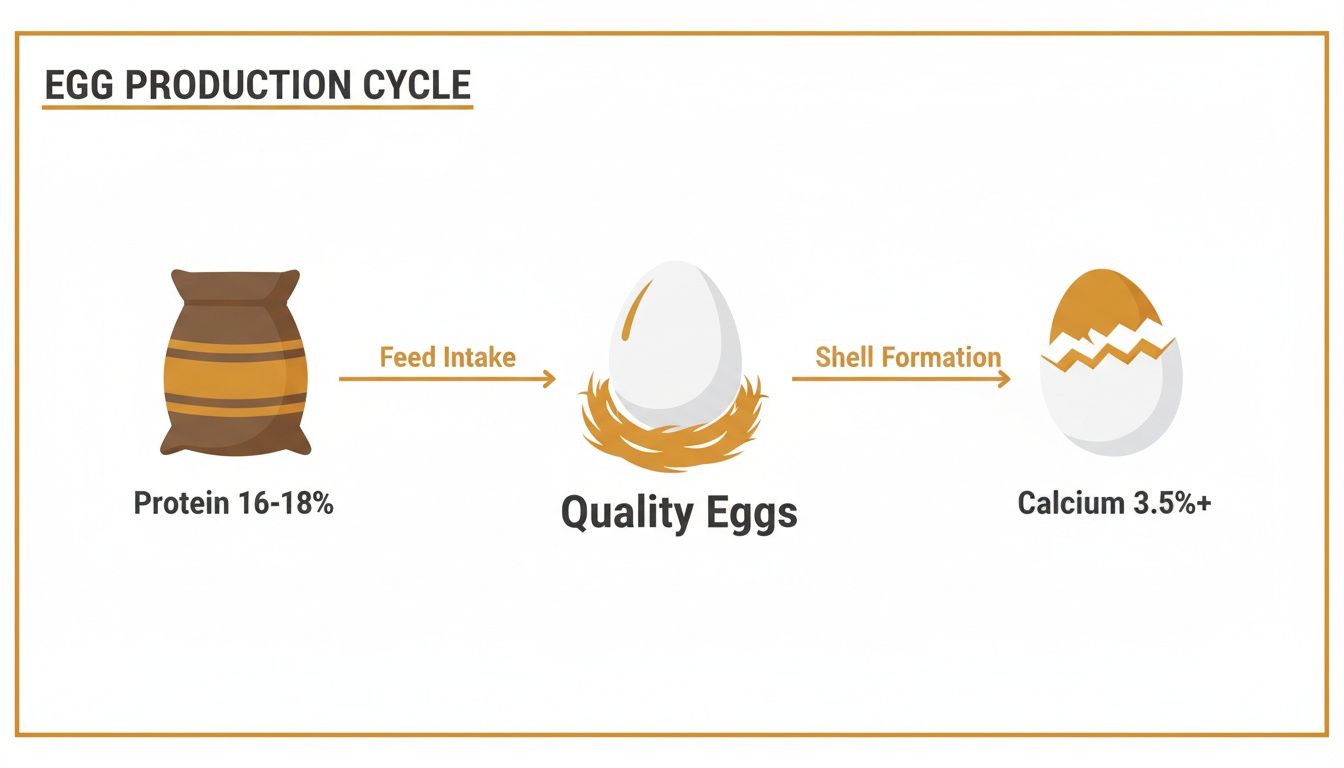
This trio—protein, calcium, and energy—has to work in a delicate balance. If any one of them is out of whack, the whole egg-making operation can screech to a halt. This is exactly why a complete layer feed is so essential. It’s formulated to provide this perfect balance in every bite, taking all the guesswork out of feeding your flock.
Beyond the Big Three: Essential Supporting Players
While those three get all the glory, a team of supporting micronutrients is working hard behind the scenes. One of the most critical is vitamin D3.
Think of vitamin D3 as the project foreman on the construction site. It’s responsible for telling the hen’s body how to properly absorb and use the calcium she eats. Without enough D3, all the calcium in the world won't do much good for shell strength.
Great egg production is a direct result of great nutrition. A hen's body is programmed to lay, but it can only build an egg from the raw materials you provide in her daily feed.
This is a science that good commercial feeds have dialed in perfectly. For instance, top-tier formulations with 18% crude protein, 2,800-3,000 kcal/kg of energy, and key helpers like phosphorus (0.45%) and vitamin D3 (3,000 IU/kg) have been shown to push laying rates over 90% in commercial flocks.
Giving your hens this complete nutritional profile is the most reliable way to keep those nesting boxes full. If you're interested in boosting their diet even further, you can check out our guide on other high-protein foods for chickens.
Choosing The Right Feed Form: Pellets, Crumbles, or Mash
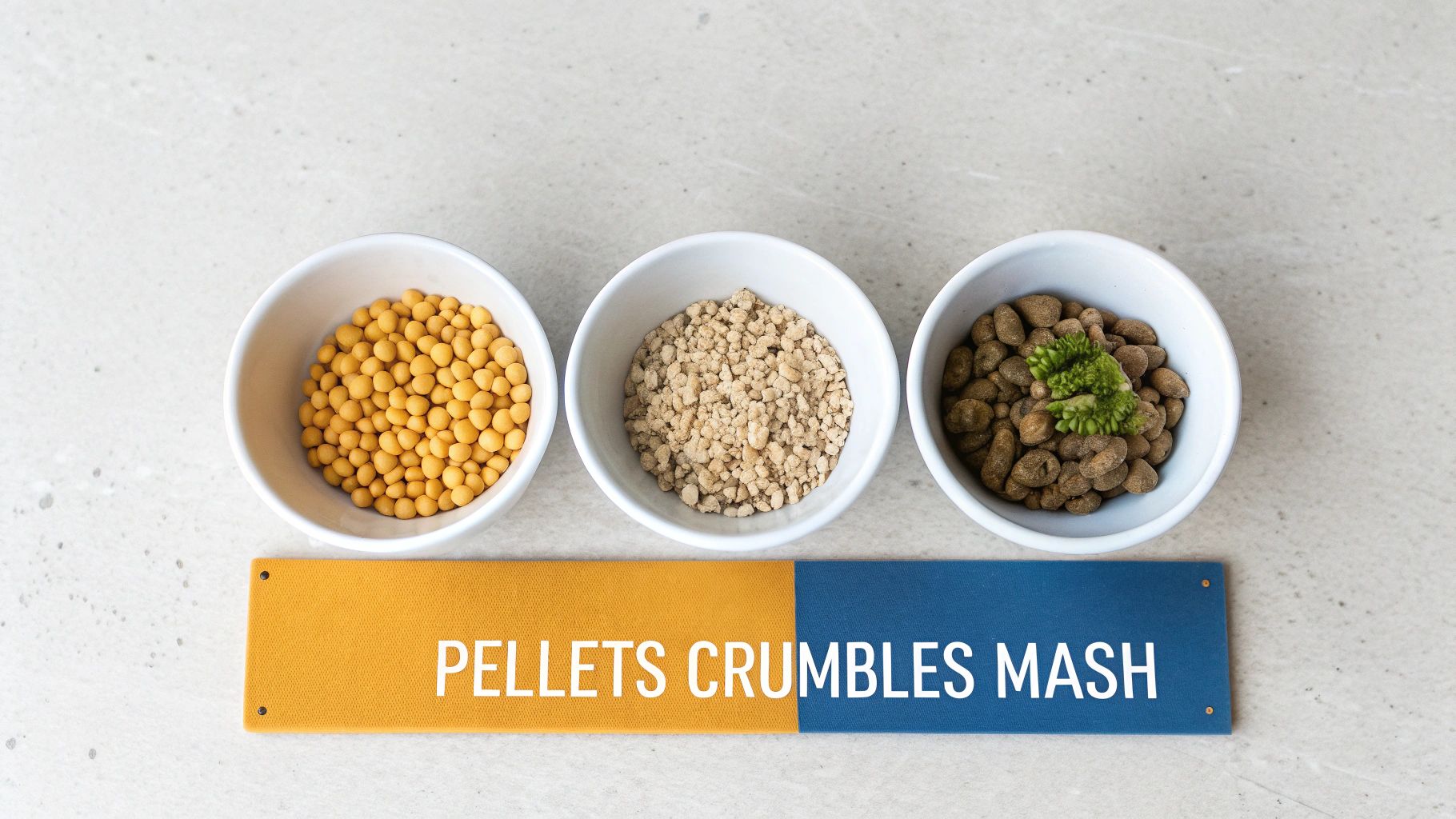
Once you've got the nutritional blueprint down, your next big decision happens right in the feed store aisle. You'll be faced with bags labeled pellets, crumbles, and mash. While the core nutrition is often the same, the form it comes in can make a huge difference in how your flock eats, how much feed gets wasted, and what’s appropriate for their age.
Think of pellets as the all-in-one nutritional bites for your hens. Every single pellet is a complete, balanced meal. This is a game-changer because it outsmarts picky eaters. You know the type—the hen that only picks out the corn and leaves the dusty, vitamin-packed bits behind. With pellets, she can't do that. Every bite guarantees she's getting the good stuff, making it a super reliable and low-waste choice for most adult laying hens.
Crumbles: The Perfect In-Between Option
So, what about smaller birds or your pullets who are just graduating to big-girl food? That’s where crumbles shine. Simply put, crumbles are just pellets that have been broken down into smaller, more manageable pieces.
This smaller size is perfect for a few scenarios:
- Bantam Breeds: Their little beaks can have a tough time with full-sized pellets.
- Young Pullets: When you're transitioning hens from their starter-grower feed, crumbles are much less intimidating.
- Mixed Flocks: If you've got a motley crew of different sizes, crumbles are a great middle-ground option that everyone can handle.
Because they’re still uniform little bits, crumbles give you the same balanced nutrition as pellets, just in a more accessible package for more delicate eaters.
Mash: The Most Natural Form
Last up is mash, which is the least processed form of chicken feed. It looks and feels like a coarse, un-baked flour mixed with cracked grains. Its loose texture is fantastic for encouraging a flock's natural instinct to scratch and forage, which is a great way to keep them busy and entertained.
But mash has a significant drawback: it basically invites picky eating. A hen can easily use her beak to flick away the powdery vitamin and mineral supplements to get to the yummy pieces of corn and oats. This selective feeding can quickly lead to nutritional gaps and a lot of wasted feed kicked all over the coop floor.
The real goal here is to make sure every single hen gets a complete and balanced diet. Pellets and crumbles are specifically designed to stop selective feeding, making them the most efficient and reliable options for consistent egg production.
To help you weigh the options for your flock, here's a quick side-by-side comparison.
Feed Form Comparison: Pellets vs. Crumbles vs. Mash
| Feed Type | Best For | Advantages | Disadvantages |
|---|---|---|---|
| Pellets | Standard-sized adult laying hens | Every bite is nutritionally complete; minimal waste; easy to store. | Can be too large for bantams or young pullets. |
| Crumbles | Bantams, young pullets, mixed flocks | Easier to eat for smaller birds; same balanced nutrition as pellets. | Can be slightly dustier and create more waste than pellets. |
| Mash | Encouraging natural foraging behavior | Its fine texture is great for baby chicks (as starter feed); can be fed wet. | High potential for waste; enables picky eating and nutritional imbalance. |
Ultimately, what works best often comes down to your specific flock's needs and your management style.
For most backyard chicken keepers who want lots of great eggs with the least amount of fuss and waste, pellets or crumbles are almost always the way to go. If you want to dive deeper into the different formulations available, check out our guide on the various kinds of poultry feeds.
Using Supplements to Enhance Your Flock's Diet
A high-quality layer feed should always be the cornerstone of your flock's nutrition, making up about 90% of everything they eat. Think of it as their complete, balanced meal. Supplements and treats are the extras—like targeted vitamins or a healthy, protein-packed snack—that can fill in any nutritional gaps and give them a boost.
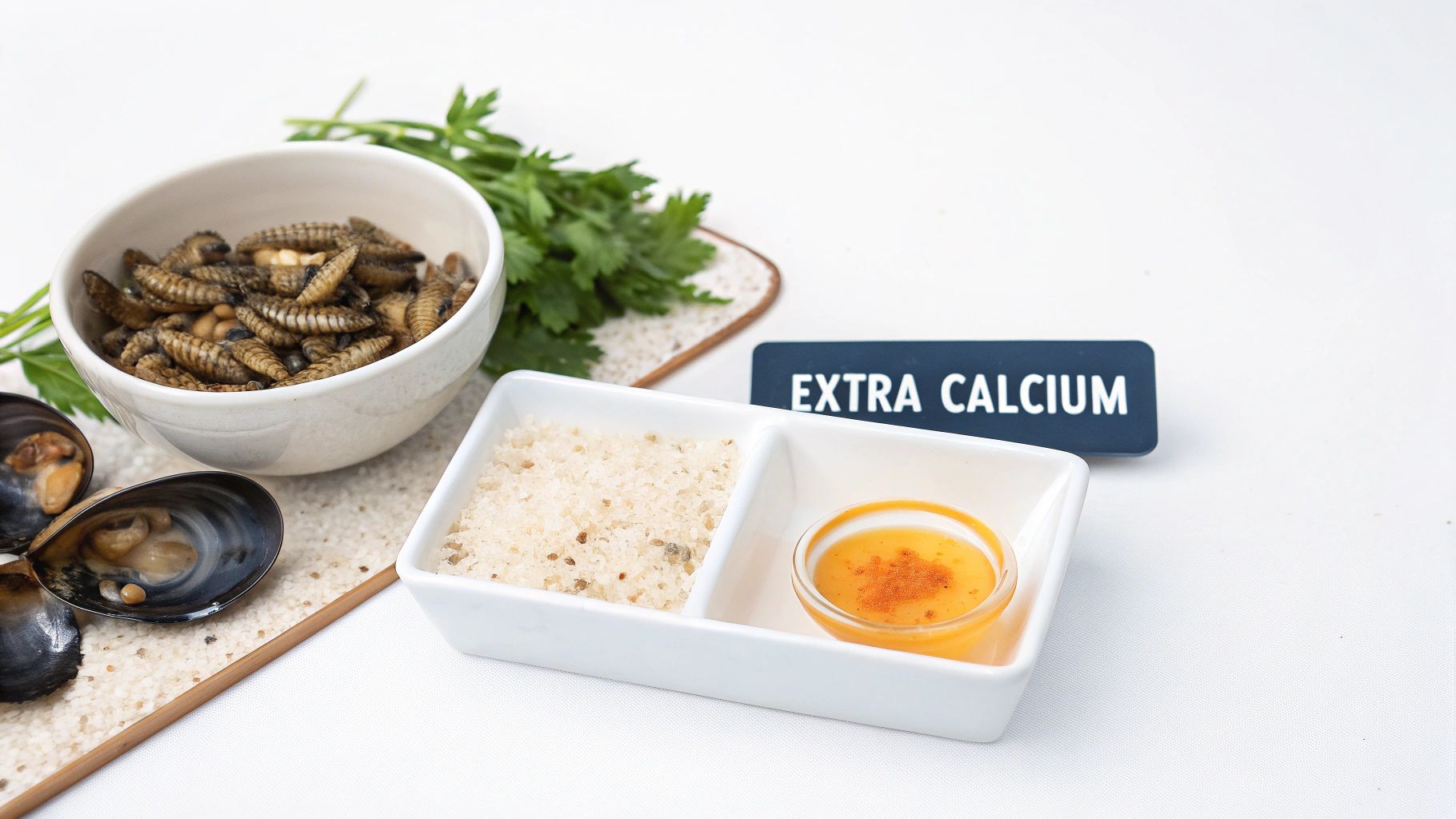
Hands down, the most important supplement you can offer is calcium. Even the best layer feeds can sometimes fall short of what a hard-working hen needs, especially for prolific layers or during hot spells when chickens naturally eat a bit less. This is why providing a separate, free-choice source of calcium is non-negotiable for strong, healthy eggshells.
When you offer calcium on the side, you empower each hen to take exactly what her body needs. She instinctively knows how much is required to form a perfect shell, preventing the problems that arise from having too much or too little calcium mixed into her main feed.
Your best bets for supplemental calcium are:
- Crushed Oyster Shell: This is the classic, tried-and-true choice. It provides a slow-release source of calcium that works overnight while the shell is being formed.
- Crushed Eggshells: A great way to recycle! Just make sure to bake your flock's eggshells until they're dry and brittle, then crush them into tiny, unrecognizable pieces. This prevents them from getting any funny ideas about pecking their own fresh eggs.
For a deeper dive into why this is so crucial, check out our guide on choosing the best calcium supplement for chickens.
Smart Treating for Better Eggs
Beyond the essential calcium, treats are a fantastic way to offer a nutritional punch—as long as you choose wisely. This isn't about tossing them kitchen scraps like bread or pasta, which can do more harm than good. The goal is to give them high-value snacks that actually support egg production.
This is where insects like black soldier fly larvae (BSFL) really shine. Unlike mealworms, which are relatively low in calcium, BSFL pack a powerful one-two punch: they're loaded with protein and a significant, naturally occurring source of calcium. This awesome combination supports everything from feather health to muscle tone while directly contributing to stronger eggshells.
Best Practices for Supplementation
How you offer these extras is just as important as what you're offering. To make sure your supplements are truly helping, not hindering, just follow a few simple rules.
First, always provide supplemental calcium in a separate container, never mixed into their main feed. This is the key to letting them "free choice" feed. Second, keep treats in moderation; a small handful per bird a few times a week is plenty.
Finally, the best time for treats is late afternoon. This ensures your hens have already gotten their fill of essential nutrients from their layer feed during the day, so they won't spoil their dinner. Stick to these guidelines, and you’ll be building upon a solid nutritional foundation, leading to a healthier flock and more beautiful eggs in your basket.
Your Year-Round Chicken Feeding Strategy
A healthy flock’s nutritional needs are always in flux. They change dramatically with the seasons and as your birds age. To keep your hens laying consistently, you need a feeding plan that can adapt right along with them. It’s all about getting them the right fuel at the right time, from their first days as fluffy chicks to their prime egg-laying years.
The journey from chick to a productive hen involves a few key feed changes. For the first several weeks, they need a high-protein chick starter to fuel that explosive growth. Once they hit about six to eight weeks old, it’s time to move them onto a grower feed. This has a bit less protein, which is perfect for supporting steady, healthy development without pushing them to lay before their bodies are ready.
The most important switch happens right around 18 weeks of age—or whenever you find that very first egg. That’s your signal to move your pullets onto a complete layer ration. This is non-negotiable, as they now have an urgent need for the high levels of calcium required to form strong eggshells.
Making the switch to a high-calcium layer feed too soon can be really tough on a young pullet's kidneys. But if you wait too long, she’ll be forced to pull calcium from her own bones to make shells, which can lead to brittle bones and a host of other health problems.
Adapting Your Feeding to the Seasons
Just like we might want a hearty stew in winter and a light salad in summer, a hen's dietary needs shift with the weather. Making a few smart adjustments as the seasons change is a secret weapon for keeping the egg basket full all year.
When the cold weather hits, your chickens are burning a ton of extra calories just to keep warm. You can give them a helping hand by offering a feed with a bit more energy, often from grains like cracked corn. Most importantly, make sure their feeder is never empty.
During the heat of summer, the big challenge is heat stress. Hens tend to eat less when it’s hot, so every peck counts. Keep cool, fresh water available at all times, and be sure your free-choice calcium source (like oyster shell) is always topped off. This is your best defense against the thin-shelled eggs that often show up during a heatwave.
Common Feeding Mistakes to Avoid
Even with the best intentions, a few common slip-ups can easily throw your flock’s health and productivity off track. The biggest offender? Going overboard on treats.
Stick to the 90/10 rule: a complete layer feed should make up at least 90% of your flock’s diet. Treats, scraps, and scratch grains should account for no more than 10%.
If you let your hens fill up on "junk food" like scratch grains or kitchen scraps, they won't have room for the balanced nutrition they truly need. Thinking ahead like this is what separates a decent feeding plan from a great one. On a commercial scale, the most efficient layer feeds can produce a dozen eggs with just 2.0-2.2 kg of feed, a key metric in the global poultry eggs market. This level of performance is often achieved with diets that include extra calcium, which has been shown to reduce instances of thin shells by up to 20%.
Frequently Asked Questions About Feeding for Eggs
Once you get the hang of the nutritional basics, the real-world questions start popping up. It's one thing to know what a hen needs, but it's another to handle the day-to-day decisions. Don't worry, the answers are usually simpler than you think.
Let's walk through some of the most common feeding dilemmas you'll face. Think of this as your go-to troubleshooting guide for keeping your hens happy, healthy, and laying strong.
When Should I Switch My Chickens to Layer Feed?
Timing this transition is one of the most important things you'll do for your young flock. The sweet spot is right around 18 weeks of age, or the moment you see that very first egg.
If you switch them over too early, you can cause some serious problems. Layer feed is packed with calcium meant for making eggshells, and all that extra mineral can be incredibly hard on a young pullet's kidneys before she's started laying. But waiting too long isn't good, either. Once a hen starts laying, her body needs that calcium now. If it's not in her feed, she’ll be forced to pull it from her own bones, which can lead to weakness and long-term health issues.
Help! Why Did My Hens Stop Laying Eggs?
It's always a little unnerving when the daily egg count suddenly drops to zero. But before you panic, take a breath and run through a quick checklist, because the cause is often something simple in their diet or environment.
First things first: check their food and water. Is the feeder empty? Is their waterer clean and full? Even a short interruption in protein, calcium, or just plain water can shut down the egg-laying machinery.
If their food and water look good, consider these other common culprits:
- Stress: Chickens are creatures of habit. A close call with a hawk, bullying from new flock members, or even loud noises can be enough to throw them off their laying schedule.
- Sickness: Keep a close eye on your flock. Are they listless? Do their droppings look unusual? A sick hen will put all her energy into getting better, and egg production is the first thing to go.
- The Annual Molt: At least once a year, every hen goes through a molt, losing old feathers and growing a new set. This process requires a massive amount of protein, so her body wisely hits pause on making eggs to focus on regrowing a healthy new coat.
Is Organic or Non-GMO Feed Actually Better for Getting More Eggs?
From a strict nutritional perspective, what really matters for egg production is the "guaranteed analysis" you see on the feed bag. The key is hitting the right percentages of protein, calcium, and other vital nutrients. Any well-formulated feed—whether it's conventional, non-GMO, or certified organic—is designed to meet those exact requirements.
The choice really boils down to your personal philosophy on farming and what fits your budget. Organic and non-GMO feeds won't inherently make your hens lay more eggs, but they do guarantee the ingredients were sourced according to standards you might find important.
How Many Treats Are Too Many?
This is the question every chicken keeper struggles with, but there’s a simple rule of thumb that makes it easy: the 90/10 rule.
At least 90% of your flock’s daily intake should come from their complete layer feed. Everything else—from kitchen scraps to scratch grains and healthy treats—should make up no more than 10% of their diet. Giving too many treats is just like letting a kid eat dessert before dinner. They fill up on the fun stuff and don't have room for the balanced meal their bodies actually need, which can quickly lead to nutritional gaps, weak eggshells, and a drop in production.
If you're looking for a treat that actually supports egg-laying instead of getting in the way, choose one high in both protein and calcium. Pure Grubs are USA-grown Black Soldier Fly Larvae that naturally contain up to 85% more calcium than mealworms, giving your hens a boost that directly contributes to strong eggshells.