

A Complete Guide to the Best Foods for Chicken Health
When it comes to the best foods for chicken, it’s all about balance. A high-quality commercial feed should be the star of the show, but safe kitchen scraps like leafy greens and the occasional high-value treat play crucial supporting roles.
Stick to the 90/10 rule—90% complete feed and 10% extras—and you’ll have a happy, healthy flock laying beautiful eggs.
What Do Chickens Eat A Quick Guide
Let's cut right to it. What does a chicken really need to eat to be healthy? The easiest way to think about it is like a food pyramid, built from three essential layers.
The base of that pyramid, making up the vast majority of their diet, is a complete commercial feed formulated for their specific age. This isn't just filler; it's scientifically balanced to give them the exact protein, vitamin, and mineral ratios they need for proper growth and consistent egg-laying. It’s their daily multivitamin and their main course, all in one.
Next up are the healthy extras from your kitchen and garden. Think leafy greens, sturdy vegetables like carrots and squash, and some fruits. These aren't just table scraps; they're enrichment. They keep life interesting for your flock and deliver a bonus dose of natural vitamins.
At the very peak of the pyramid, you have the special stuff: high-value treats. These should be given sparingly to reward your chickens, encourage natural foraging, or just to strengthen that bond. We're talking about things like a handful of scratch grains, mealworms, or calcium-packed Black Soldier Fly Larvae.
The Chicken Diet Pyramid
To make this crystal clear, here’s a visual breakdown of how those layers fit together.
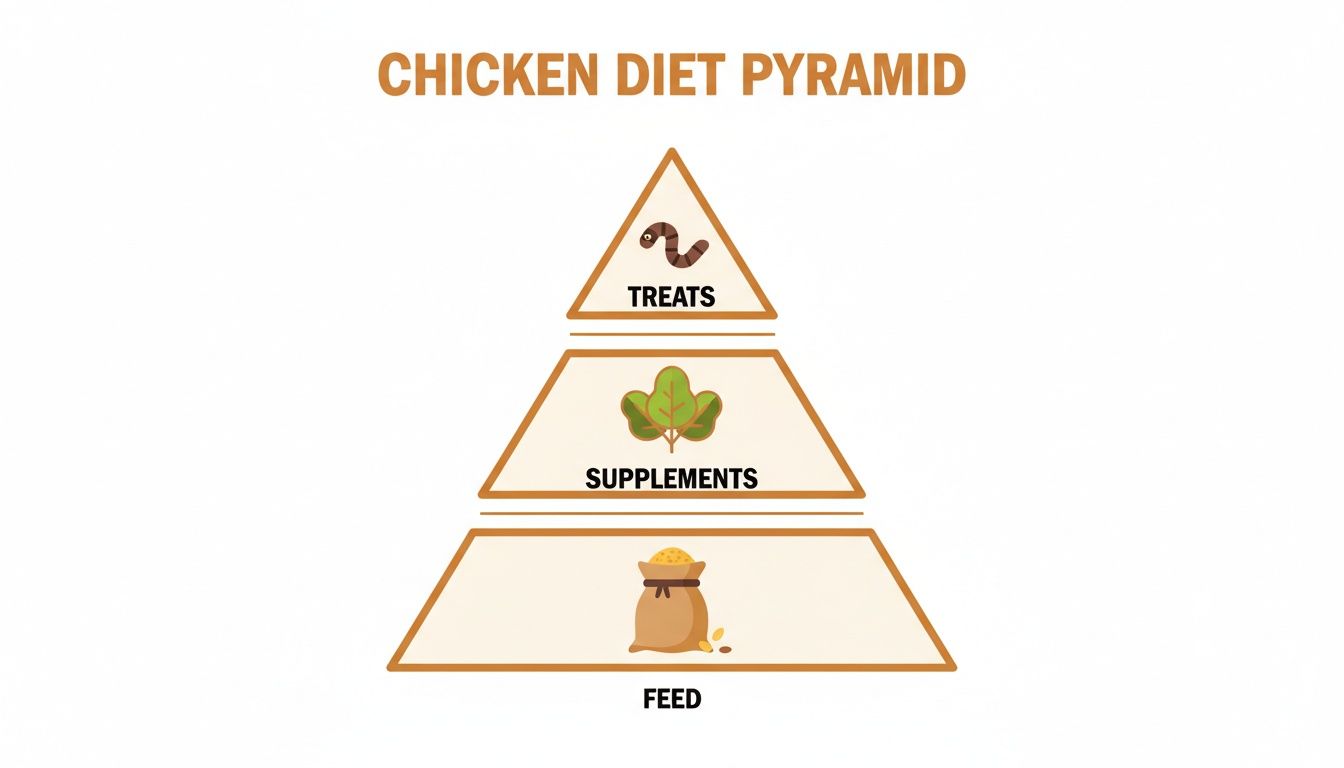
As you can see, complete feed is the non-negotiable foundation. Supplements and treats are the finishing touches. Following this structure is the secret to avoiding the nutritional imbalances that often happen when a flock gets too many snacks. Overdoing the treats might seem kind, but it can lead to some serious health issues down the line.
We’ll keep coming back to this pyramid as we dig into everything from protein and calcium to the absolute necessity of grit. Once you get this simple structure, you’re well on your way to crafting the perfect meal plan for a thriving flock.
To put it all together, here is a quick summary of how these components work together.
The Chicken Diet Pyramid At A Glance
| Food Category | Role in Diet (90/10 Rule) | Key Nutrients Provided |
|---|---|---|
| Complete Feed | 90% of total intake | Balanced protein, vitamins, minerals, and energy |
| Supplements | Part of the 10% extras | Extra vitamins, fiber, and enrichment |
| Treats | A small part of the 10% | Targeted protein boosts, calcium, and behavioral rewards |
This table neatly lays out the "why" behind each food type. Keeping this 90/10 balance in mind is the most practical thing you can do for your chickens' long-term health.
Choosing the Right Commercial Chicken Feed
Commercial chicken feed is the bedrock of a healthy flock. You simply can't skip it. It's the one thing that guarantees your birds get the complete, balanced nutrition they need to thrive, grow strong, and lay plenty of eggs.
Think of it like feeding a person through different life stages. Babies need a specific formula, toddlers have their own dietary needs, and adults need a balanced diet to stay healthy. Chickens are no different. Each stage of their life demands a unique nutritional profile, and the right feed is designed to deliver exactly that.
Walking into a feed store can be a bit overwhelming at first glance, with all the different bags and labels. But it all clicks into place once you understand the three main life stages. The trick is just matching the bag to your birds' age and purpose.
From Chick to Pullet: Starter and Grower Feeds
The journey starts with Starter Feed. This is the high-octane fuel for baby chicks, designed for the period from hatch day up to about 6-8 weeks old. It’s packed with protein—typically 20-24%—which is absolutely essential for their explosive growth, feather development, and building a tough immune system. It’s their version of baby food, giving them the best possible start.
When you grab a bag of starter, you’ll usually see two choices: medicated or unmedicated.
- Medicated Feed: This formula includes a small amount of amprolium, a medication that helps protect vulnerable chicks from coccidiosis. Coccidiosis is a nasty intestinal parasite that can spread like wildfire in a brooder, so this is a smart choice for most new chicks.
- Unmedicated Feed: This is a good option only if your chicks have already been vaccinated against coccidiosis at the hatchery or if you are an expert at maintaining a completely sanitized, low-risk environment.
Once your little fluffballs start looking more like awkward teenagers (we call them pullets), it's time to switch to Grower Feed. This is their food from about 8 weeks up to 18-20 weeks, or right before they lay their first egg. Grower feed dials back the protein a bit to 16-18% and has less calcium than layer feed. This encourages steady, healthy development without pushing their bodies into laying eggs too soon.
Supporting Your Hens: Layer Feed
When your hens hit that 18-20 week mark and start looking ready for business, it's time for the final switch to Layer Feed. For anyone wanting a steady supply of fresh eggs, this feed is non-negotiable. It has around 16% protein but is seriously fortified with calcium—usually 3.5-5%. This extra calcium is critical for forming strong, solid eggshells day after day.
A high-quality layer feed isn't just a suggestion; it's a requirement. It prevents all sorts of health problems, from frustratingly soft-shelled eggs to dangerous conditions like egg binding. This feed provides the precise nutritional blueprint for a productive hen.
Laying hens are incredible little egg-making machines. The sheer scale is mind-boggling—U.S. hens can produce over 9 billion eggs in a single month. This incredible output is only possible because of specialized, nutrient-dense feeds. Globally, hens rely on over 170 million metric tons of layer feed each year to stay healthy and productive.
Understanding Feed Forms: Crumble vs. Pellets
On top of the nutritional formulas, you'll also notice the feed itself comes in different shapes and sizes. The two most common forms are crumble and pellets.
- Crumble: Think of this as pellets that have been broken down into smaller, bite-sized pieces. It's the go-to for starter and grower feeds because it's so easy for tiny beaks to eat.
- Pellets: These are just compressed little cylinders of feed. They're great for adult birds and can help cut down on waste, since chickens are less likely to scratch them out of the feeder and all over the ground.
Honestly, choosing between the two often comes down to what your flock prefers. Some keepers swear by pellets for reducing mess, while others find their flock is perfectly happy with crumble. For a deeper dive into the pros and cons, check out our complete guide on the different types of chicken feed.
The Essential Nutrients Your Flock Needs to Thrive
A good commercial feed is the cornerstone of a healthy flock, but knowing what's in it and why it matters is what separates a good chicken keeper from a great one. Think of it this way: you can’t just put any old liquid in your car and expect it to run well. It needs a specific type of fuel.
Chickens are the same. They require a precise balance of nutrients to thrive. Get it right, and you'll see the results in their brilliant feathers, solid eggshells, and busy, happy behavior. Let's dig into the big three every chicken owner needs to master: protein, calcium, and grit.
Protein: The Building Block for Growth and Feathers
Protein is the absolute foundation of a chicken's health. It builds muscle, supports organ function, and, most visibly, creates feathers. In fact, feathers are about 85% protein, which is why a hen’s protein needs go through the roof during her annual molt.
Trying to raise a chicken without enough protein is like building a house without enough bricks. The whole structure will be weak and incomplete. In a chicken, this deficiency shows up as:
- Poor Feather Quality: Feathers might look ragged, brittle, or just plain unhealthy.
- Stunted Growth: Chicks and growing pullets won't develop properly.
- A Drop in Egg Laying: Hens simply can't form eggs without the necessary protein.
This is exactly why chick starter feed is packed with 20-24% protein—it fuels their explosive growth from a fluffball into a fully-feathered bird. As they get older, their needs change, and the protein levels in grower and layer feeds adjust accordingly.
Calcium: The Secret to Strong Eggshells
If protein builds the chicken, calcium builds the eggshell. While this mineral is crucial for strong bones, its main job for a laying hen is producing a tough, protective shell for every egg she lays.
Each time a hen forms an egg, she pulls a massive amount of calcium from her body. If her diet doesn't have enough, she’ll start stealing it from her own bones. This can lead to a dangerous condition where her skeleton becomes fragile and weak.
Think of a hen's calcium supply like a bank account. High-quality layer feed makes daily deposits, but laying an egg is a huge withdrawal. Offering supplemental calcium on the side ensures she never overdraws her account.
This is why you'll see experienced flock keepers offer crushed oyster shells or eggshells in a separate dish, completely free-choice. It lets each hen take exactly what her body tells her she needs, preventing those dreaded thin, soft, or shell-less eggs that signal a problem.
Grit: A Chicken's Unseen Teeth
Now for the most overlooked part of the chicken diet: grit. Chickens don't have teeth, so they can’t chew. Instead, they have a powerful muscle called the gizzard that grinds up their food for them. But the gizzard can't do its job alone.
It needs grit—tiny, hard bits of granite or stone that the chicken swallows. These little rocks live in the gizzard and act like millstones, smashing and pulverizing seeds, grains, and tough greens so the nutrients can be properly digested.
It's important to know there are two types:
- Insoluble Grit: These are the tiny granite chips that act as the "teeth." They stay in the gizzard for a long time doing their grinding job.
- Soluble Grit: This is usually oyster shell. It provides calcium but dissolves quickly and is absorbed by the body, so it doesn't help with grinding.
If your flock eats only a commercial crumble or pellet feed, they don't really need grit since the food is already easy to digest. But the second you toss them some scratch grains, garden weeds, or kitchen scraps, providing a source of insoluble grit becomes absolutely essential for their health.
Healthy Treats From Your Kitchen and Garden
Sharing a few tasty extras from your kitchen or garden is one of the real joys of keeping chickens. It’s a great way to bond with your flock, cut down on food waste, and give them something exciting to peck at. But this is where a little restraint goes a long way. Treats are for fun, not a replacement for their real food.
The best guideline to live by is the 90/10 Rule. It’s simple: think of everything your chicken eats in a day. At least 90% of that needs to be their complete, commercially formulated feed. That’s where they get the non-negotiable, balanced nutrition they need to thrive.
The last 10% is your "fun" budget. This is where you can toss in those kitchen scraps and garden goodies. Sticking to this rule ensures they get all the vitamins and enrichment from treats without messing up the crucial nutrition of their main feed, which can lead to health problems down the road.
Safe Leafy Greens and Garden Vegetables
Chickens are born foragers, and they go absolutely wild for dark, leafy greens. Think of it as setting up a little salad bar for your flock. These are packed with vitamins and low in calories, making them a perfect choice. You can hang a whole cabbage head for them to peck at or just chop up some greens and mix them into a mash.
Some of the best ones to offer are:
- Kale & Swiss Chard: These tough, leafy greens are loaded with vitamins A, C, and K and can really stand up to a flock’s enthusiastic pecking.
- Lettuce (in moderation): Darker lettuces like romaine are fine, but they're mostly water. Too much can lead to runny droppings, so don't overdo it.
- Spinach: This is a good one, but only offer it occasionally. Spinach contains oxalic acid, which can interfere with how your hens absorb calcium—a crucial nutrient for egg-laying.
Beyond the leafy stuff, plenty of common garden veggies make fantastic, healthy snacks. Things like carrots, cucumbers, and pumpkins give them a good dose of fiber and vitamins and keep them busy. Cooked sweet potatoes are another big hit!
Fruits and Grains in Moderation
For a chicken, fruit is dessert. They love the sugar, but just like with kids, too much of a sweet thing can cause problems like an upset digestive system. So, think small portions and only occasionally.
A few great fruit options include:
- Berries: Blueberries, raspberries, and strawberries are antioxidant-rich and perfectly sized for a quick, healthy snack.
- Melons: On a hot summer day, nothing beats a chunk of watermelon—rind and all! It's a great way to help them hydrate.
- Apples: The flesh of an apple is perfectly fine, but always make sure you remove the seeds first. Apple seeds contain trace amounts of cyanide, which is toxic to chickens.
Grains are another treat people love to give, especially in the winter to provide a bit of extra energy. But nutritionally, they’re a bit like junk food—high in calories but not much else. Never let grains become a main food source. For even more ideas, check out our guide on safe snacks for chickens.
Remember the 90/10 Rule: Treats are the small, joyful slice of the pie, not the main course. Overindulging your flock, even with healthy foods, can unbalance their diet and lead to poor egg quality or health problems.
By being thoughtful with your treats, you can make your chickens' lives a lot more interesting. A good trick is to wait until the end of the day to give them any scraps. That way, you know they've already filled up on their complete feed first, and your offerings are just a healthy and happy end to their day.
Boost Eggshell Strength with This Superior Treat
Let's be honest—not all chicken treats are created equal. While tossing some scratch grains is fun, some "snacks" can actually work as powerful nutritional supplements. When it comes to finding the best supplemental foods for chicken, few can hold a candle to Black Soldier Fly Larvae (BSFL).
Think of BSFL less as a treat and more as a targeted tool for solving common flock problems. If you're dealing with weak eggshells, lackluster feathers, or a slow molt, it often comes back to a gap in their nutrition. A high-quality BSFL product like Pure Grubs delivers a concentrated boost of key nutrients that gets right to the heart of these issues.
Why Calcium Content Matters So Much
The real showstopper with BSFL is their incredible calcium content. A laying hen's body is an egg-making machine, and it demands a huge amount of calcium every single day to form strong shells. Their layer feed provides the baseline, but things like age, heat stress, or hitting a peak laying stride can push their needs way up.
This is where you see the stark difference between treats. Imagine giving your flock a snack that provides up to 85% more calcium than something common like mealworms. That’s the advantage of Black Soldier Fly Larvae. With U.S. egg production consistently exceeding 9 billion per month, backyard keepers need reliable ways to maintain excellent shell quality. While traditional feeds are the standard, there's a growing interest in sustainable, USA-grown alternatives like BSFL, reflecting broader trends in the poultry feed market.
This extra calcium isn't just an abstract number—it directly translates into thicker, tougher eggshells that don't crack the moment you look at them. For any flock owner, that means more keepers for your breakfast table and healthier, happier hens.
BSFL vs Mealworms A Nutritional Showdown
To really see the difference, let's put BSFL head-to-head with mealworms, another hugely popular treat. Both are fantastic sources of protein, but when you look at their mineral profiles, they're in completely different leagues—especially when it comes to the all-important calcium-to-phosphorus ratio.
Here's a quick look at how they stack up.
| Nutrient | Black Soldier Fly Larvae (BSFL) | Mealworms | Benefit for Chickens |
|---|---|---|---|
| Protein | ~40% | ~50% | Essential for feather growth, muscle development, and overall health. |
| Calcium | Very High | Very Low | Critical for strong eggshells and skeletal health in laying hens. |
| Ca:P Ratio | Ideal (1.5:1 to 2:1) | Poor (<0.3:1) | A balanced ratio is vital for proper calcium absorption and use. |
As you can see, mealworms are loaded with phosphorus, which can actually block a chicken's ability to absorb the calcium it needs. BSFL, however, come with a naturally perfect ratio, ensuring all that wonderful calcium is bioavailable and ready for her body to use. If you want to dive deeper, we have a whole guide on the best calcium supplements for chickens.
Ultimately, while mealworms are a fine protein treat, BSFL are a true calcium powerhouse, making them the superior choice for laying hens.
Choosing a Safe and Reliable Source
Whenever you introduce a new supplement to your flock's diet, quality and safety have to be top priorities. The source of your BSFL really, really matters. Imported insect feeds can be a total gamble, with inconsistent quality control and murky origins.
Choosing USA-grown BSFL, like Pure Grubs, gives you peace of mind. They are produced in FDA-compliant facilities and are carefully tested for heavy metals, ensuring they are perfectly safe for your hens and for the eggs your family eats.
A top-tier BSFL product should always be:
- USA-Grown: This guarantees the product meets strict safety and quality standards.
- Water-Washed: A simple step that removes impurities for a much cleaner treat.
- Tested for Contaminants: This is non-negotiable. You need proof that there are no harmful heavy metals like lead or mercury.
By opting for a superior treat like BSFL, you're making a direct investment in your flock's health. You're giving them the nutritional backup they need for strong shells, brilliant feathers, and a long, productive life.
7 Foods You Should Never Feed Your Chickens
It’s incredibly tempting to toss all your kitchen scraps out to the flock, but some everyday human foods can be surprisingly dangerous for chickens. Your top priority is keeping your birds safe, and that starts with knowing what to keep far away from their beaks.
Think of this as your "do not feed" list. Knowing what’s toxic—and why—is one of the most important parts of raising a healthy, happy flock. Once you get the hang of it, avoiding these dangers becomes second nature.
Common Dangers in Your Kitchen and Garden
Believe it or not, some of the riskiest foods for your chickens are probably in your kitchen right now. It's a good idea to memorize this list and make sure anyone else who helps with the flock knows it, too. When in doubt, just don't feed it to them. It's that simple.
Here are a few of the biggest offenders to watch out for:
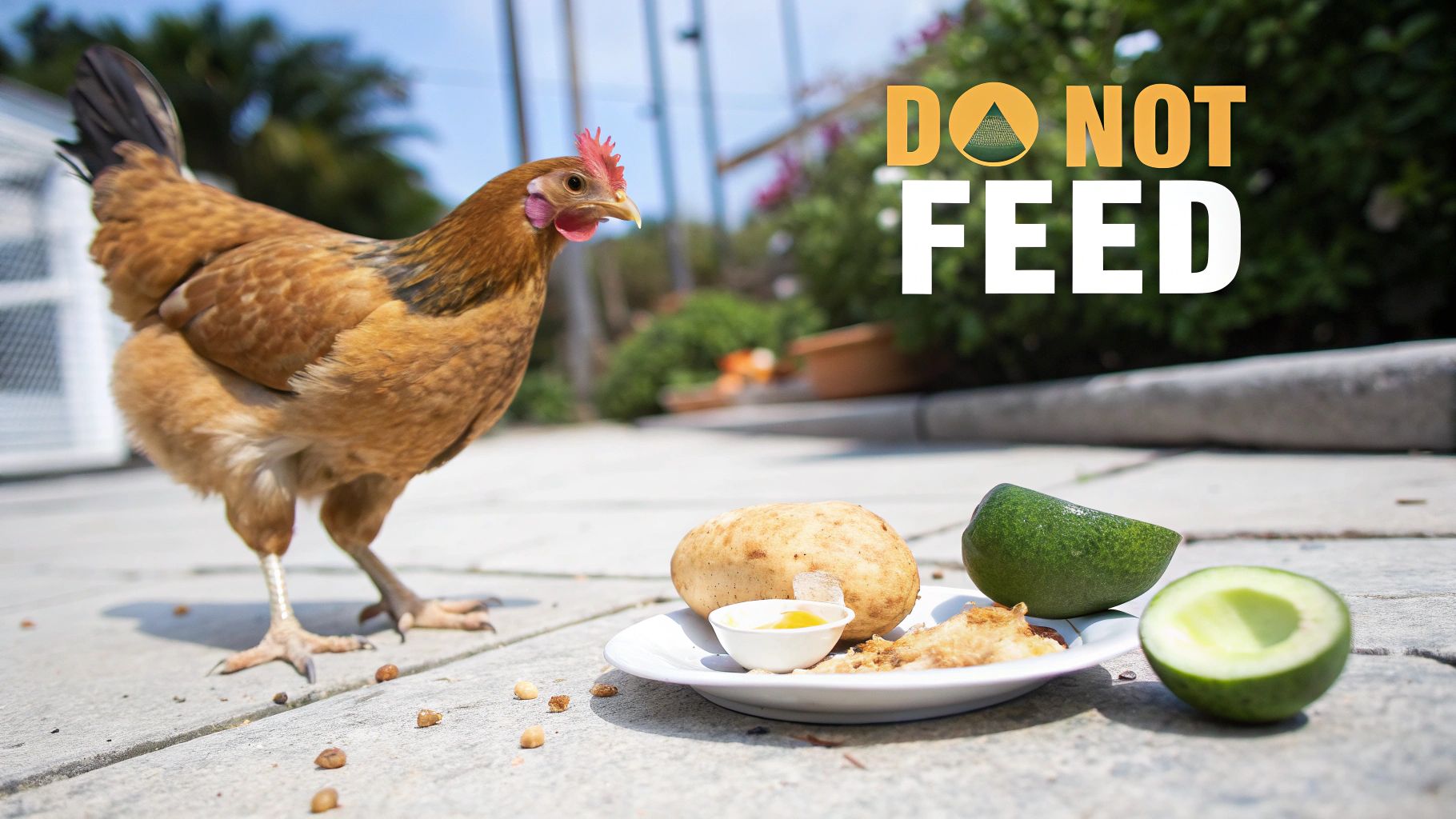
- Avocado Skin and Pit: These parts contain a toxin called persin, which is seriously harmful to birds. It can cause breathing problems and even heart failure. While the fleshy part is less toxic, it's safer to just avoid avocados altogether.
- Raw or Undercooked Beans: Don't let their small size fool you. Raw beans contain a natural compound called phytohaemagglutinin, and even a few can be fatal to a chicken. If you want to share beans, make sure they are thoroughly cooked first—then they're a great source of protein.
- Green Potatoes and Peels: Ever see a potato that's turned green? That green color is a sign of solanine, a poison that develops when potatoes are exposed to light. This toxin is concentrated in the green skin and any sprouts, so never feed these to your flock.
- Onions and Garlic: In large amounts, compounds in onions and garlic can damage a chicken's red blood cells, leading to anemia. A tiny bit mixed in with a big batch of scraps probably won't hurt, but they should never be given as a standalone treat.
- Moldy or Spoiled Food: This one seems obvious, but it’s worth repeating. If you wouldn't eat it, your chickens shouldn't either. Mold produces mycotoxins that can be deadly to poultry. That fuzzy bread or leftover casserole goes in the compost, not the coop.
Your chicken coop isn't a garbage disposal. Every scrap you offer should be intentional. A moment of carelessness can lead to a very sick bird, so treat their diet with the same respect you give your own.
Keeping these few things in mind is a huge part of being a responsible chicken keeper. By being a little picky about their treats, you're ensuring every bite they take is helping them, not hurting them.
Common Questions About Feeding Chickens
Even the most seasoned chicken keeper runs into questions now and then. When you're out there with your flock every day, practical issues always pop up. Let's clear up some of the most common feeding questions we hear so you can fine-tune your flock’s diet with confidence.
How Much Food Does a Chicken Need Each Day?
As a rule of thumb, a standard laying hen will eat about 1/4 pound (or roughly 1/2 cup) of feed per day. But that's just an average! The actual amount can swing depending on the chicken's breed, its size, and even the time of year.
The best way to handle this is to give your flock constant, free-choice access to their main feed. Chickens are surprisingly good at eating just what they need. Simply keep their feeder full, and they'll handle the rest. This approach ensures they're getting the right amount without you having to play portion-control police.
Do Chickens Need Different Food in Winter?
Absolutely. When the temperature drops, a chicken's dietary needs shift. They burn a ton more calories just to keep themselves warm, which is a big job.
You can give them a helping hand by offering a small amount of scratch grains, like cracked corn, in the late afternoon. As their bodies work to digest the grains overnight, the process generates a bit of extra heat—a welcome internal furnace on a cold night.
Just remember, scratch grains are a treat, not a complete meal. Think of it like a bedtime snack. Their complete layer feed should always be the star of the show, with scratch making up only a small part of their daily diet. And don't forget, access to unfrozen water is just as critical for them in the winter.
Are Thin Eggshells a Sign of a Poor Diet?
Thin, rubbery, or soft-shelled eggs are the classic calling card of a calcium deficiency. It’s the first thing I check for. If you start seeing them, your first step is to double-check that you're using a high-quality layer feed, as it's specifically formulated with the extra calcium laying hens need.
If the feed is correct, the next step is to offer crushed oyster shells in a separate dish, completely free-choice. This lets each hen take exactly what her body tells her she needs. You can also give them a high-calcium treat like Black Soldier Fly Larvae for a quick, effective boost to help get those shells strong and solid again.
Can I Mix Different Types of Chicken Feed?
Generally, it’s not a good idea to mix feeds meant for different life stages. For example, the high calcium levels in layer feed can actually harm a young chick's developing kidneys. On the flip side, grower feed just doesn't have enough calcium to support a productive laying hen.
When it's time to switch feeds—like moving your pullets from grower to layer—the key is to do it gradually. Start mixing the new feed in with the old over the course of a week. This slow transition helps prevent any digestive upset and gives their systems time to adjust smoothly.
For a superior, high-calcium treat that strengthens eggshells and supports feather health, trust Pure Grubs. Our USA-grown Black Soldier Fly Larvae are a safe, natural, and effective supplement for your flock. Discover the difference at https://puregrubs.com.