
The Best Snacks for Chickens Your Flock Will Love
The best snacks for your flock are the ones that add real value to their diet, not just empty calories. Think of things like protein-rich black soldier fly larvae, vitamin-packed leafy greens and berries, or even a little energy kick from grains like cracked corn and oats. These kinds of treats give your chickens a nutritional boost that goes beyond their daily feed, helping with everything from feather quality and egg laying to their overall get-up-and-go.
What Makes a Truly Great Chicken Snack
Before you start sharing your kitchen leftovers, it's worth knowing what makes a treat helpful versus one that could cause problems. It’s a ton of fun to spoil your birds, but there’s a bit of a science to it. The real goal is to give them something interesting and nutritious without messing up the balanced diet they get from their main feed.
I like to think of a chicken's diet like a well-built house. The foundation has to be a top-quality, complete layer feed—that's the vast majority of what they eat. That feed is scientifically designed with all the protein, vitamins, and minerals a hen needs to do her thing, whether that's scratching in the dirt or laying a beautiful egg. Snacks are the finishing touches, like the paint color or the light fixtures. They add character and value, but they can't hold the house up on their own.
The Foundation: The 90/10 Rule
If you remember one thing about giving your chickens treats, make it the 90/10 Rule. It’s a simple guideline, but it’s absolutely key to keeping your flock healthy.
The 90/10 Rule is straightforward: at least 90% of your flock’s diet should come from their complete feed. Snacks and treats should make up no more than the remaining 10%.
Sticking to this rule is the single best way to sidestep common health issues. When chickens gorge on "junk food" like bread or too many kitchen scraps, they simply don't have room for the good stuff in their feed. Before you know it, you can run into problems like nutritional gaps, obesity, or a slump in egg production. A small handful of treats per chicken each day is usually just about right.
Key Nutrients to Look for in Snacks
Not all snacks are created equal. The best ones offer a targeted nutritional punch that supports your chickens' health in specific ways. When you're picking out treats, here’s what to look for:
- Protein: This is the workhorse nutrient for feather growth, muscle tone, and steady egg laying. High-protein snacks are a huge help during the annual molt when your birds are regrowing all their feathers—a process that uses up a massive amount of protein.
- Calcium: You can’t have strong eggshells without it. While their layer feed should be their main source, some calcium-rich snacks can give them a little extra insurance. Just remember that it needs to be balanced with phosphorus for the chickens to absorb it correctly.
- Vitamins and Minerals: Fresh fruits and veggies are fantastic for this. Dark leafy greens, for instance, are loaded with Vitamin K, and pumpkin seeds are a great source of zinc. These little extras help bolster their immune systems and keep them looking bright and healthy.
- Fiber: Good for their gut! Greens, vegetables, and whole grains all provide fiber that keeps their digestive systems running like a well-oiled machine.
To help you get a quick overview, here's a simple table summarizing some of the best snack options and what they bring to the table.
Quick Guide to Nutritious Chicken Snacks
This table gives you a summary of the best snack categories for your chickens, highlighting their nutritional benefits at a glance.
| Snack Category | Key Nutrients | Primary Benefit |
|---|---|---|
| Insects (BSFL, Mealworms) | Protein, Calcium, Healthy Fats | Feather growth and egg production support |
| Leafy Greens (Kale, Spinach) | Vitamins A, K, & C, Iron, Fiber | Immune support and digestive health |
| Vegetables (Squash, Carrots) | Beta-carotene, Vitamins, Antioxidants | Overall vitality and yolk color enhancement |
| Fruits (Berries, Melon) | Vitamins, Antioxidants, Natural Sugars | Healthy energy boost and hydration |
| Grains (Oats, Corn) | Carbohydrates, B Vitamins | Quick energy, especially in cold weather |
| Seeds (Pumpkin, Sunflower) | Healthy Fats, Zinc, Magnesium, Vitamin E | Skin & feather health, natural deworming aid |
By focusing on treats that deliver these kinds of nutrients, snack time becomes more than just a fun break in the day—it becomes a powerful tool for boosting your flock's health. It’s all about making that 10% count and turning a simple treat into a genuine benefit. This thoughtful approach doesn't just make your chickens happy; it leads to a healthier and more productive flock all around.
High-Protein Treats for a Thriving Flock
When it comes to keeping chickens healthy and vibrant, protein is king. It's the fuel for everything they do—from building strong muscles and laying eggs consistently to the grueling process of growing thousands of new feathers during their annual molt. Giving your flock high-quality protein snacks is one of the best things you can do to support their overall well-being.
Think of protein as the construction crew for your chicken's body. A hen needs a steady supply to form the egg white (albumen) day after day. And when she's molting? Feathers are made of about 85% protein, so she needs a massive boost to get through it without losing condition.
This simple pie chart shows exactly how treats, including these protein powerhouses, should fit into their daily diet.
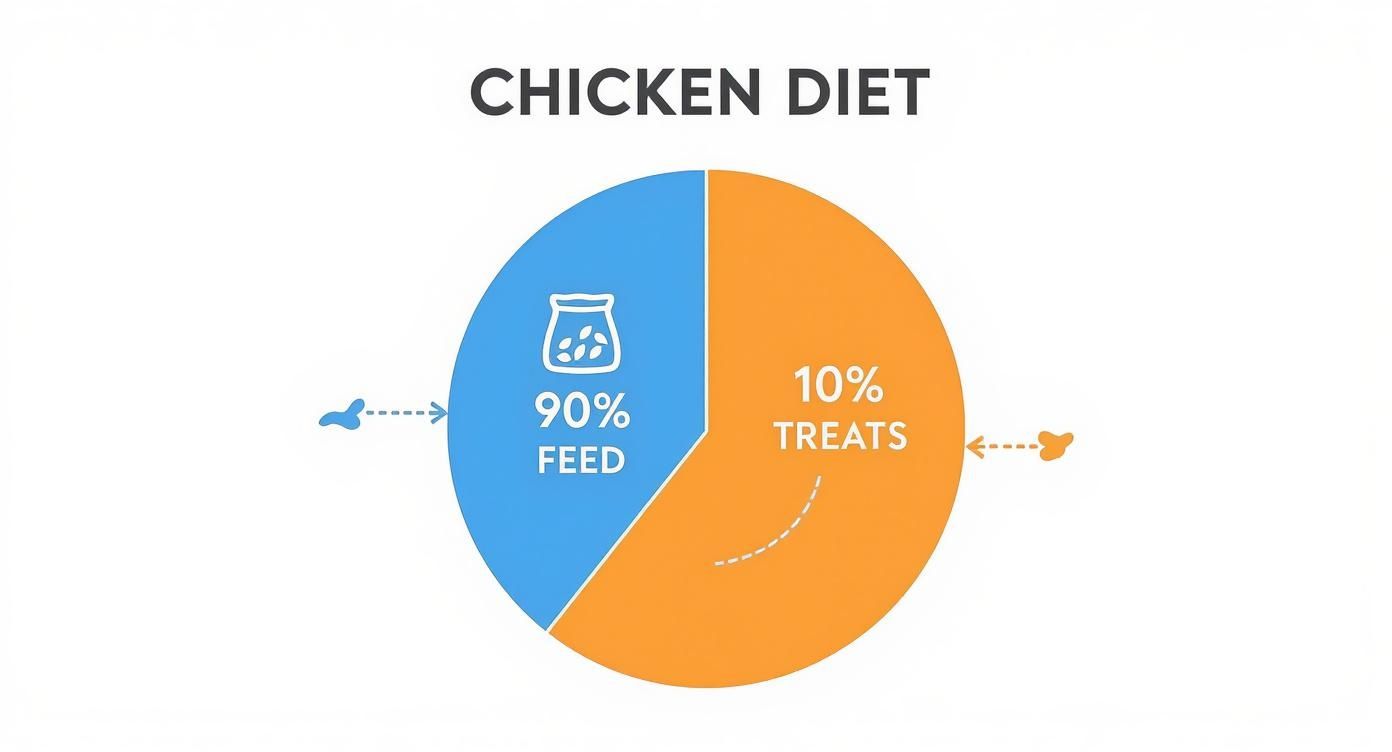
As you can see, their main feed is the foundation. Treats are the fun, functional supplement that should only make up a small slice of the pie.
The Great Insect Debate: BSFL vs. Mealworms
For chickens, nothing beats the excitement of insects. Two choices dominate the coop scene: Black Soldier Fly Larvae (BSFL) and mealworms. They look similar, and chickens go crazy for both, but there's a critical nutritional difference every chicken keeper needs to know about.
Mealworms are incredibly popular, but they come with a hidden flaw: their calcium-to-phosphorus ratio is way off. They contain far more phosphorus than calcium, which can actually block a hen's body from absorbing the calcium she desperately needs for strong eggshells.
Here's the bottom line: A hen's body needs more calcium than phosphorus to properly absorb and use it. If that ratio gets flipped, you can end up with weak, rubbery eggs, even if you offer oyster shells on the side.
This is where Black Soldier Fly Larvae really shine. BSFL naturally contain up to 85 times more calcium than mealworms, providing a perfectly balanced profile. This makes them a far superior choice for supporting bone health and fantastic eggshell quality without messing with your flock's delicate mineral balance. If you want to dive deeper, we have a whole guide on other high-protein foods for chickens.
Comparing Protein Powerhouses: BSFL vs. Mealworms
To see the difference side-by-side, let's look at the numbers. This table breaks down why one of these insect snacks clearly comes out on top for laying hens.
| Nutrient | Black Soldier Fly Larvae (BSFL) | Dried Mealworms |
|---|---|---|
| Protein | ~40% | ~50% |
| Fat | ~30% | ~25% |
| Calcium | ~1.5% | ~0.05% |
| Phosphorus | ~0.8% | ~0.9% |
| Ca:P Ratio | ~2:1 (Ideal) | ~1:18 (Poor) |
While mealworms edge out BSFL slightly on protein content, the story changes completely when you look at the calcium. The balanced calcium-to-phosphorus ratio in BSFL makes them the hands-down winner for supporting a laying flock's long-term health.
Other Excellent Protein Sources
Beyond insects, a few other snacks can give your flock a great protein boost when fed in moderation.
-
Scrambled Eggs: It might feel a little weird, but feeding cooked eggs back to your chickens is a fantastic trick. Eggs are a complete, easily digestible protein source, perfect for helping a flock bounce back from stress or a tough molt. Just be sure to always cook them to eliminate any health risks and prevent them from developing a taste for their own raw eggs.
-
Plain Yogurt: A little bit of plain, unsweetened yogurt offers a one-two punch of benefits. It’s a great source of protein and also delivers a dose of beneficial probiotics to support a healthy gut. A spoonful or two mixed into their feed is all they need.
How Much Is Too Much?
Even with the healthiest snacks, you can have too much of a good thing. Moderation is key. A small handful of BSFL or a bit of scrambled egg shared among a few birds is a perfect daily treat.
Always stick to the 90/10 Rule: treats should only account for about 10% of your flock's total diet. Tossing them too many protein snacks can throw their nutrition off-balance and potentially cause health issues like kidney strain. Keep portions small, and you'll give them a healthy boost without getting in the way of their essential complete feed.
The Best Fruits and Vegetables for Your Chickens
Think of fresh produce as nature’s candy for your chickens—but way healthier. While protein-packed snacks are great for growth and feathers, fruits and veggies deliver the vitamins, minerals, and hydration that keep your flock’s systems running smoothly. It’s an easy way to give their diet a boost and keep them feeling their best.
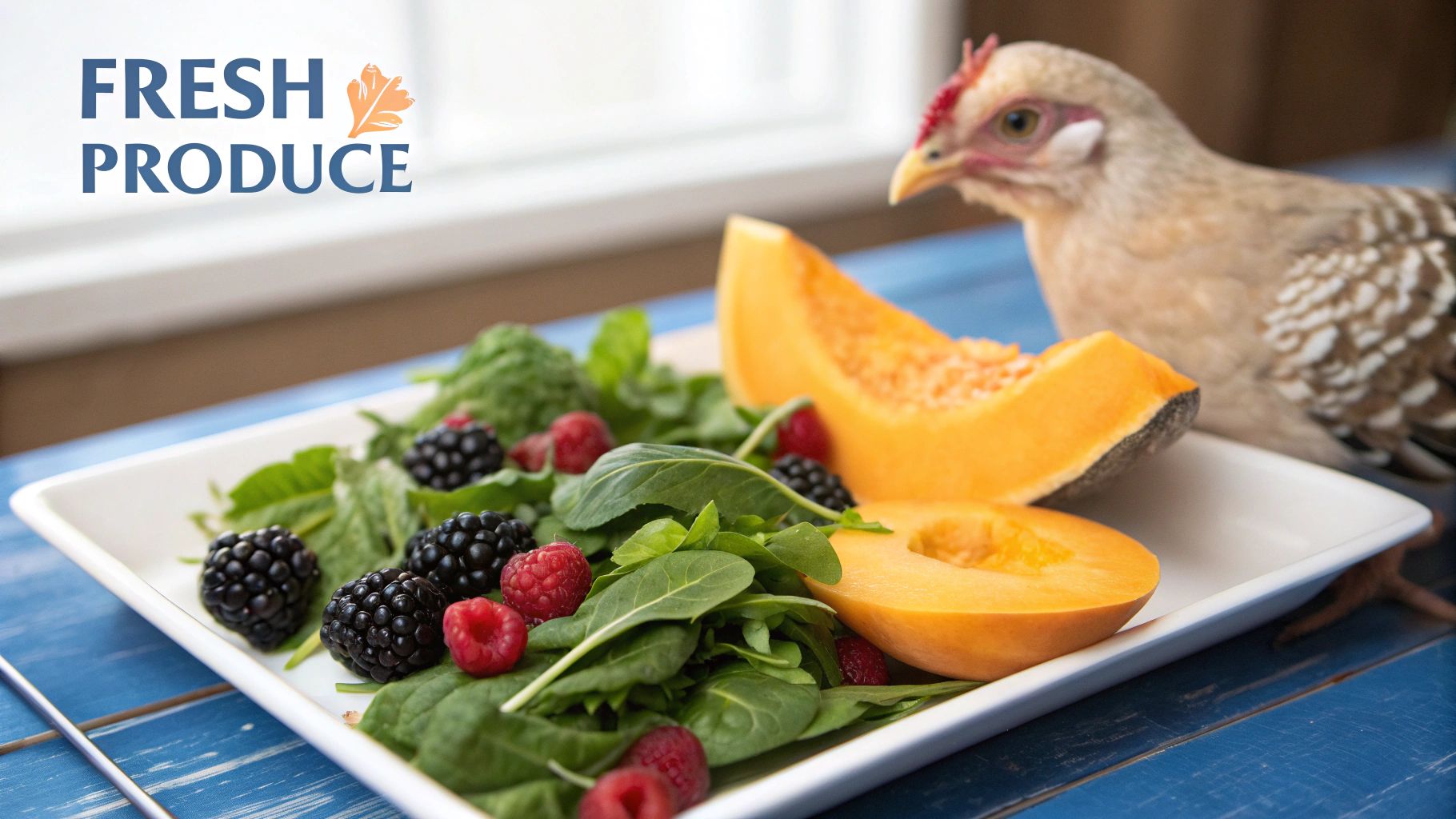
These natural goodies are also full of fiber, which helps with digestion, and antioxidants that support a strong immune system. Honestly, though, one of the best parts is just watching them go crazy for a slice of watermelon or a handful of berries. It’s pure entertainment.
Top Produce Picks for Your Flock
When it comes to produce, think colorful. A variety of colors usually means a variety of nutrients, so mixing things up gives your chickens a much broader range of health benefits.
Here are a few flock-favorites that are always a hit:
- Dark Leafy Greens: Think kale, Swiss chard, and even spinach (just not too much). They’re absolutely loaded with vitamins A, C, and K, which are vital for everything from immune health to proper blood clotting.
- Berries: Blueberries, strawberries, and raspberries are antioxidant powerhouses. Their small size is perfect for scattering around the run, encouraging your chickens’ natural instinct to forage.
- Melons: On a scorching summer day, nothing beats melon. Watermelon and cantaloupe are over 90% water, making them the perfect snack for keeping the flock cool and hydrated.
- Pumpkin and Squash: Don’t throw out your fall decorations! Cooked pumpkin and squash are fantastic treats. The seeds are especially valuable, as they are rich in zinc and are believed to have natural deworming properties.
- Broccoli and Cauliflower: These veggies provide a great source of fiber and vitamin C. Your flock will have a blast pecking at the little florets, which you can serve either raw or lightly steamed.
Pro Tip: Looking for a simple boredom buster? Hang a whole head of cabbage from a string in the coop or run. It creates a "chicken tetherball" that will keep them busy for hours and prevents the treat from getting trampled into the ground.
Foods to Strictly Avoid
While it's tempting to toss all your kitchen scraps into the coop, some common human foods are downright dangerous for chickens. Feeding them the wrong thing can cause serious health problems or even be fatal, so it pays to be careful.
Never, ever feed your chickens these items:
- Avocado: The skin and pit contain a toxin called persin, which is extremely toxic to birds.
- Raw or Green Potatoes: These contain solanine, a poison that can make your flock very sick. Cooked potatoes are fine in moderation.
- Onions and Garlic: In large amounts, these can destroy red blood cells and lead to anemia. A tiny bit mixed into some leftovers is usually okay, but never offer them whole.
- Uncooked Beans: Raw, dry beans contain a potent toxin called hemagglutinin. Always make sure beans are thoroughly cooked before sharing.
- Rhubarb Leaves: The leaves are high in oxalic acid, which is toxic and can cause kidney failure.
The health of backyard chickens is just one small part of a much larger picture. While there isn't much data on the chicken snack market itself, the global poultry market is projected to grow from $373.33 billion in 2024 to $394.75 billion in 2025, as highlighted by industry sources like MeatPoultry.com. It just goes to show how much relies on keeping birds healthy, whether you have a flock of five or five thousand.
When in doubt, the safest bet is to just throw it out. Sticking to treats you know are safe ensures snack time is always a fun and healthy experience for your flock.
Using Grains and Seeds to Encourage Foraging
Chickens are hardwired to scratch, peck, and explore. It's what they do. Tossing a handful of grains and seeds into their run is one of the best ways to tap into this deep instinct, giving them a bit of mental exercise that’s just as vital as the nutrition.
You're essentially turning snack time into an activity that keeps them busy and happy.
The trick is to think of these grains as a "scratch" treat, not a full meal. It’s like a treasure hunt for your flock. Instead of just dumping seeds in a feeder, scattering them makes the chickens work for their food, just like they would in the wild. This simple habit goes a long way in preventing boredom and the bad habits that come with it, like feather picking.
Choosing the Best Grains and Seeds
You can find all sorts of grain mixes out there, but they're not all the same. Many are packed with cheap fillers. I’ve found it’s much better to offer specific, high-value grains that give your flock real benefits. That way, you know you’re giving them something that actually helps.
A few of my go-to choices are:
- Cracked Corn: This is the classic cold-weather snack. It's loaded with carbohydrates that chickens digest slowly, which generates metabolic heat and helps them stay warm on a frosty night. A small handful before they roost is perfect in the winter.
- Oats: Whether whole or rolled, oats are a fantastic source of protein and fiber. They're a comforting, energy-boosting snack that's great for digestion and especially helpful when your birds are going through a stressful molt.
- Black Oil Sunflower Seeds (BOSS): These little things are a nutritional powerhouse. They are packed with healthy fats, vitamin E, and key minerals that help grow glossy, strong feathers and support healthy skin. Plus, their shells are thinner than the striped kind, making them much easier for chickens to crack open.
It's crucial to understand that a commercial "scratch grain" mix is a treat, not a feed. It lacks the balanced protein, vitamins, and minerals found in a complete layer crumble or pellet and should never be used as a replacement.
How to Feed Grains for Maximum Benefit
The goal here isn't just to feed them—it's to enrich their day. So, how you offer the grains is just as important as what you offer. Never just put them in a dish. Always scatter the grains and seeds widely across their run, over their coop bedding, or on a clean patch of ground.
This simple act of scattering triggers their natural foraging instincts, which is a core part of what chickens eat naturally. It keeps them moving, encourages them to use those strong legs and feet, and stops one bossy hen from gobbling up all the goodies.
A good rule of thumb for a healthy flock is about one tablespoon of scratch grains per chicken, per day. Just remember to count this towards their overall 10% treat allowance to keep their main diet balanced. By using grains this way, you're giving them more than just food—you’re giving them a job to do, keeping them physically active and mentally sharp.
Simple DIY Snack Recipes for Healthy Chickens
Whipping up your own chicken snacks is one of the most rewarding parts of keeping a flock. Not only is it a great way to save money compared to pricey store-bought options, but you get total control over the ingredients. No weird fillers, no preservatives, just pure, wholesome goodness you can feel good about.
It’s all part of a bigger shift we're seeing in how people think about where their food comes from. As more folks look for ethically raised meat and eggs, that same mindfulness is spilling over into how we care for our own backyard birds. Making your own nutritious treats is a small but meaningful way to take part in that. If you're curious about the wider trends, market insights from firms like Stats and Data show this growing consumer focus.
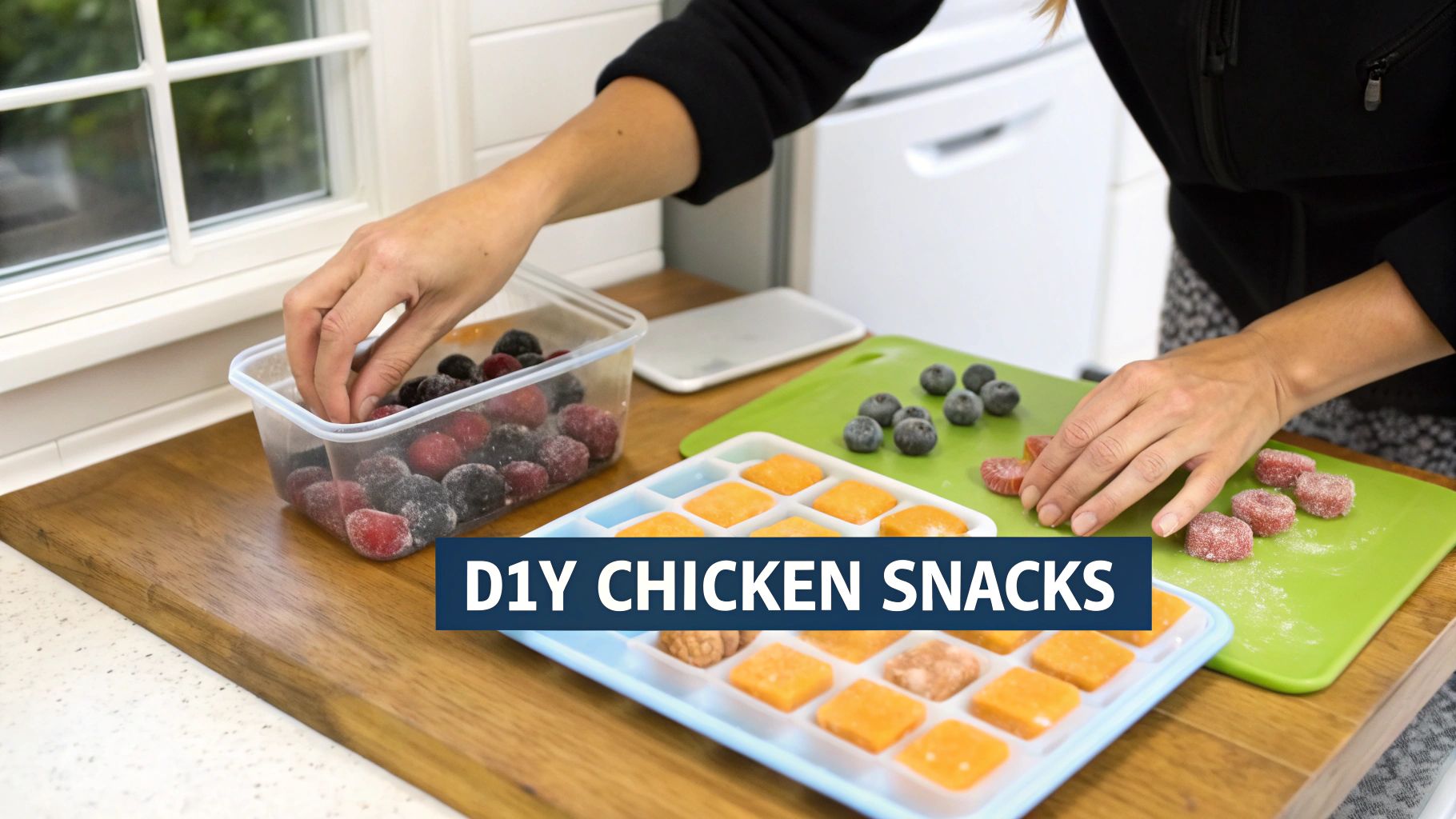
Ready to get started? Here are two of my favorite, super-easy recipes for treats your chickens will go wild for.
Homemade Flock Block for Foraging Fun
You've probably seen those big flock blocks at the feed store. They're awesome for keeping chickens from getting bored, but they can be expensive. This DIY version gives you all the boredom-busting benefits for a fraction of the price, using stuff you likely have on hand. It's a lifesaver on rainy days when the flock is stuck in the coop.
What You'll Need:
- 2 cups of scratch grains (any mix of cracked corn, oats, and barley is perfect)
- 1 cup of black oil sunflower seeds
- 1/2 cup of dried insects—I like using Pure Grubs for that protein and calcium kick
- 1/2 cup of poultry grit (only necessary if your flock is confined and can't forage for it)
- 2 large eggs, which will act as the "glue"
- 1/4 cup of melted coconut oil or unsulfured molasses
How to Make It:
- First, get your oven preheating to 325°F (160°C).
- Grab a big bowl and toss in all the dry ingredients. Give them a good stir to mix everything up.
- Next, add the whisked eggs and melted coconut oil (or molasses). Stir it all together until the whole mixture is sticky and evenly coated.
- Now, press the mix into a small loaf pan or a muffin tin for smaller, single-serving "pucks." The trick is to pack it in there really tightly—that's what makes it last.
- Bake for 30-40 minutes. You're looking for it to be firm to the touch and a nice golden brown. Let it cool down completely before you surprise your flock with it.
This recipe is really just a starting point. Don't be afraid to customize it! Throw in some chopped herbs like oregano or parsley, pumpkin seeds, or a bit of kelp powder for extra minerals. Your chickens will thank you.
Frozen Fruit Pucks for Hot Summer Days
When the summer heat really hits, chickens can have a tough time. These frozen pucks are the perfect answer. They're a hydrating, cooling treat that couldn't be simpler to make, and your flock will absolutely love you for it on a scorching afternoon.
What You'll Need:
- A mix of chicken-safe fruits (berries, chunks of melon, and diced apples are always a hit)
- A handful of leafy greens, like chopped kale or spinach
- Water or plain, unsweetened yogurt
How to Make It:
- Fill the cups of a muffin tin loosely with your chopped fruit and greens.
- Pour water over the top, or spoon in some yogurt, until the cups are almost full.
- Pop the tin into the freezer for at least 4 hours, or until they're frozen solid.
- When you're ready, just pop one out and place it in a shallow dish out in the run. Your chickens will have a blast pecking at it as it slowly melts, keeping them cool, hydrated, and busy.
A Quick Checklist for Safe Chicken Treats
Snack time should be fun for your flock, but making sure it’s safe is our number one job as chicken keepers. Chickens are curious eaters and will try just about anything, but their digestive systems can be more delicate than you might think.
This checklist is your quick-and-dirty guide to keeping treats healthy. Run through these points before you toss anything into the coop—it’ll help you sidestep the common mistakes that can lead to an unhappy or, even worse, a sick bird.
The Golden Rules of Chicken Snacking
Your first line of defense is simply knowing what not to give them. Chickens do best with simple, whole foods. Anything that’s been heavily processed for us humans is almost always a bad choice for them.
- No Mold or Rot: This one is non-negotiable. Never feed your flock anything moldy, rotten, or spoiled. It might feel like you're reducing waste by giving them food that's a bit past its prime, but mold can contain mycotoxins that are seriously toxic to chickens.
- Avoid Salt and Sugar: Chickens just aren't built to handle high levels of salt or sugar. Snacks like chips, pretzels, candy, or sugary cereals can throw their electrolyte balance completely out of whack and cause major health issues.
- Steer Clear of Processed Foods: Things like most store-bought breads, crackers, and deli meats are packed with salt, sugar, and preservatives. They offer little to no real nutrition and are tough on a chicken's digestive system.
Here’s a simple rule of thumb I always follow: If it’s junk food for me, it’s definitely junk food for my chickens. Stick to whole, unprocessed goodies as much as you can.
Sourcing and Preparation Safety
Safety isn’t just about the what, but also the how. A little extra attention to where your treats come from and how you prepare them makes all the difference.
First off, always go for pesticide-free produce when possible. If you’re not feeding them from your own garden, give any store-bought fruits and veggies a good wash to get rid of chemical residues.
Next, be smart about kitchen scraps. While many leftovers are great, you need to be absolutely sure they don't contain anything dangerous. Every chicken owner should get familiar with the common foods that are harmful to chickens—it’s essential knowledge.
Finally, take it slow with new things. When you introduce a new snack, just offer a tiny bit and see how they do. This helps you catch any potential digestive upset before it becomes a real problem. A little caution goes a long way.
Answering Your Top Questions About Chicken Snacks
Even the most seasoned chicken keepers have questions, especially when it comes to treats. It’s completely normal to second-guess things when you want the absolute best for your flock. So, let's dive into a few of the questions I hear most often.
Getting these little details right is what separates a good treat routine from a great one, ensuring your flock gets all the fun without any of the worry.
Can Snacks Improve My Hens' Eggshell Quality?
They absolutely can, but you have to be strategic about it. The number one, hands-down best way to improve eggshell quality is to offer crushed oyster shell free-choice. Just put it in a separate dish from their main feed, and they'll take what they need, right when they need it.
Sure, calcium-rich greens like kale can add a little boost, but the oyster shell is the real workhorse. It's also worth remembering that some popular treats, like mealworms, are high in phosphorus. Phosphorus can actually block calcium absorption, so if you're feeding those, having that separate oyster shell available is non-negotiable for keeping shells strong.
A hen’s body does the incredible work of forming an eggshell overnight, a process that demands a massive amount of calcium. A constant, separate supply of oyster shell is like a calcium bank she can draw from, preventing a deficit and keeping those eggs consistently tough.
What Kitchen Scraps Should I Never Feed Chickens?
It's tempting to share all your kitchen leftovers to cut down on waste, but some common foods are downright dangerous for chickens. Knowing what to toss in the compost instead of the scrap bucket is key to keeping your birds safe.
Steer clear of these and never feed them to your flock:
- Avocado: The pit and skin contain persin, which is toxic to birds.
- Raw or Green Potato Skins: Full of solanine, a natural poison.
- Onions and Garlic: In large quantities, these can wreck their red blood cells and lead to anemia.
- Uncooked Beans: Raw, dry beans have a nasty toxin that only disappears after thorough cooking.
- Chocolate: Just like with dogs, this is a definite no-go.
- Moldy or Spoiled Food: You wouldn't eat it, and neither should they. Molds can create mycotoxins that are seriously harmful.
My rule of thumb is simple: when in doubt, throw it out.
Can Ducks and Chickens Eat the Same Snacks?
Most of the time, yes! If you have a mixed flock, they can all enjoy things like leafy greens, chopped veggies, berries, and quality insects together. It's one of the joys of keeping them. That said, there are a couple of important differences to be aware of to keep everyone healthy.
Ducks need more niacin (Vitamin B3) than chickens, especially when they're ducklings, to develop strong legs and joints. So while they can share snacks, your ducks really need a feed formulated specifically for waterfowl as their main diet. Also, ducks need water to eat properly. Never give them dry, gummy things like bread, which can easily become a choking hazard if they can't wash it down.
At Pure Grubs, our whole mission is to provide the best quality, USA-grown Black Soldier Fly Larvae to help your flock thrive. Our grubs are a fantastic high-calcium, safe alternative to mealworms, perfect for building stronger eggshells and beautiful feathers. See the difference for yourself at Pure Grubs.